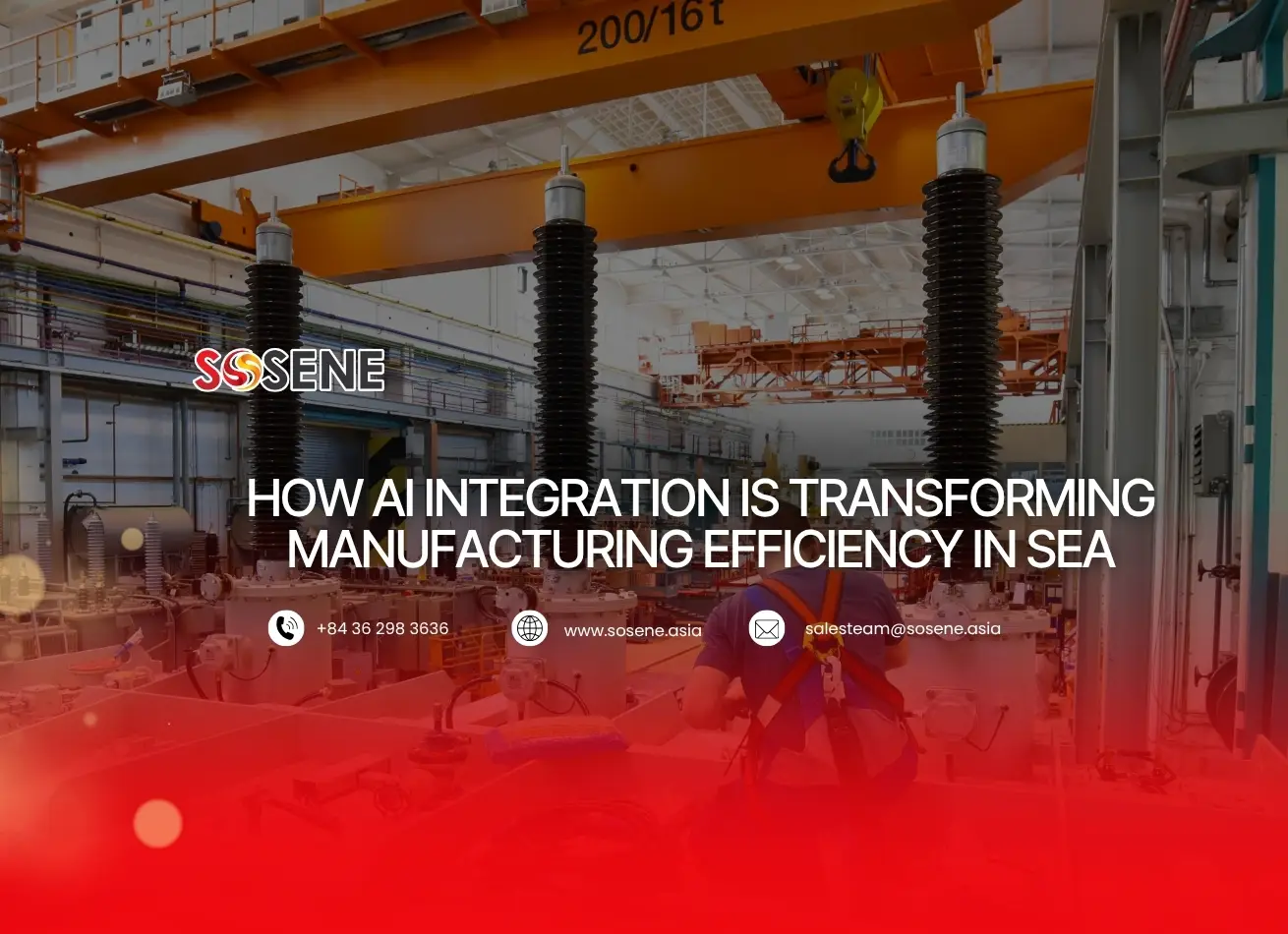
Manufacturing in Southeast Asia is entering a new era. Once defined by cost advantage, the region is now competing on intelligence advantage for how fast and precisely it can turn data into decisions.
AI integration is the enabler of this shift. It connects machines, data, and human expertise into one intelligent ecosystem.
Enterprises that embrace this change are achieving double-digit productivity gains and higher operational resilience — not by replacing humans, but by augmenting them with data-driven insight.
This article explores what AI integration and automation truly mean for modern manufacturers, why Southeast Asia (SEA) has become the global testing ground, and how Sosene helps enterprises move from pilot projects to full-scale transformation.
Table of Contents
Key Takeaways
- AI integration connects data, processes, and people into intelligent manufacturing systems.
- SEA is evolving from a low-cost hub to an AI-enabled manufacturing powerhouse.
- Key benefits include predictive maintenance, optimized production, and reduced downtime.
- Success requires a strong AI integration architecture and a clear business strategy.
- Sosene helps enterprises unify AI, automation, and analytics for measurable efficiency gains.
Further Reading
What Is AI Integration in Manufacturing?
AI integration means embedding artificial intelligence into existing operations as a core decision engine.
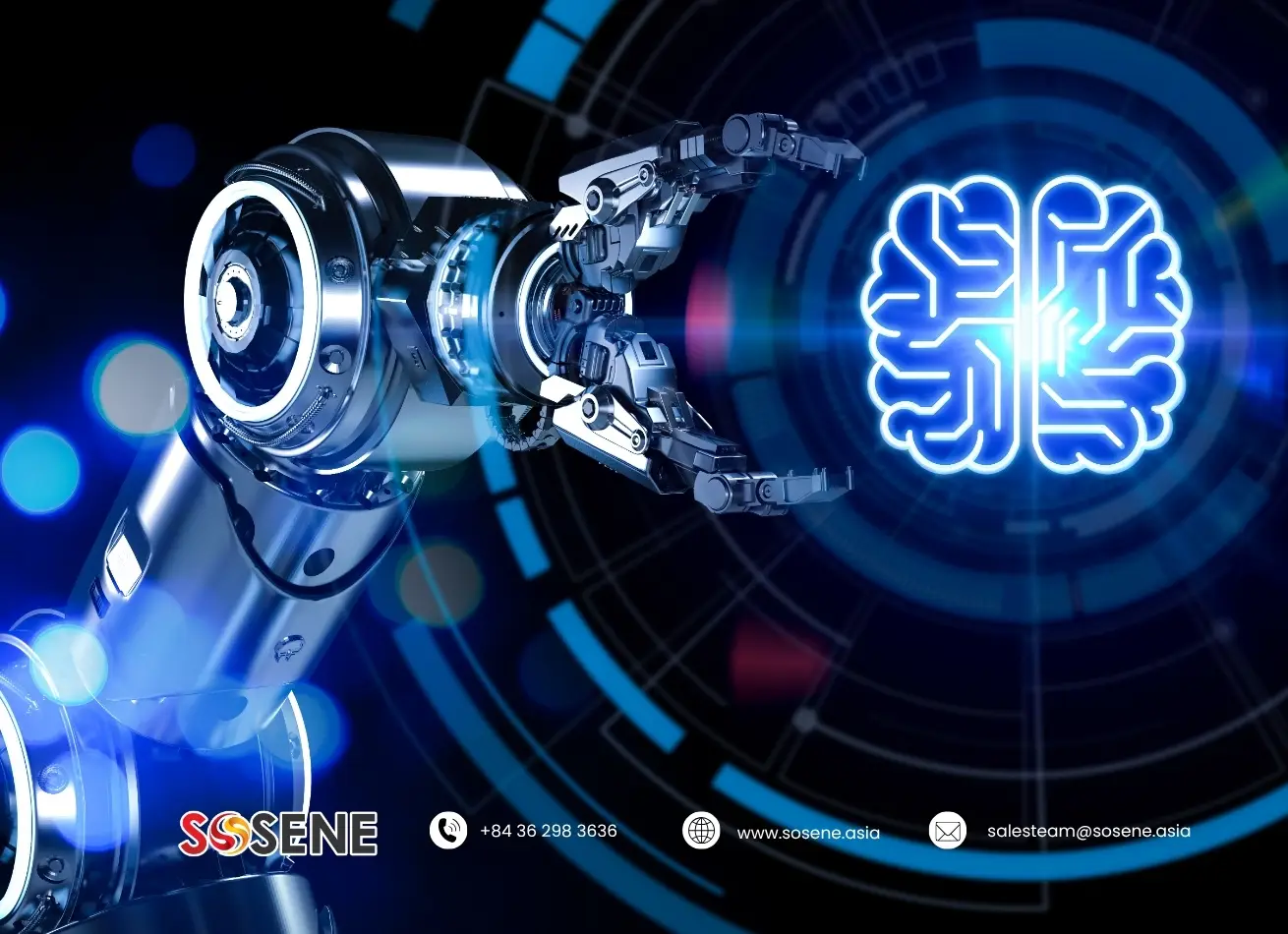
It connects systems such as ERP, MES, IoT sensors, and quality control cameras into a unified AI architecture that continuously learns and optimizes performance.
In manufacturing, this integration spans five main layers:
- Data Infrastructure – Collecting and cleaning data from machines, supply chains, and production lines.
- AI Models – Using predictive analytics, computer vision, and optimization algorithms.
- Automation Systems – Integrating robotics and control systems for autonomous decision-making.
- Human Interface – Dashboards that translate AI insights into actionable tasks for operators.
- Governance & Security – Ensuring data quality, model transparency, and compliance.
Why Southeast Asia Is the New Frontier for AI-Driven Manufacturing
1. Strategic Supply Chain Shift
As global manufacturers diversify away from single-market dependencies, SEA is gaining traction as a resilient production base.
AI integration helps regional factories meet higher client expectations in transparency, traceability, and efficiency.
2. Digital Infrastructure Readiness
Strong investments in 5G, cloud, and industrial IoT make countries like Singapore, Vietnam, and Malaysia capable of real-time machine-to-machine communication, a foundation for advanced automation.
3. Government and Industry Support
Programs such as Singapore’s “Smart Industry Readiness Index” and Vietnam’s “National AI Strategy 2030” are accelerating adoption by providing funding, training, and shared standards for AI in manufacturing.
Key AI Integration Benefits for Manufacturers
Predictive Maintenance
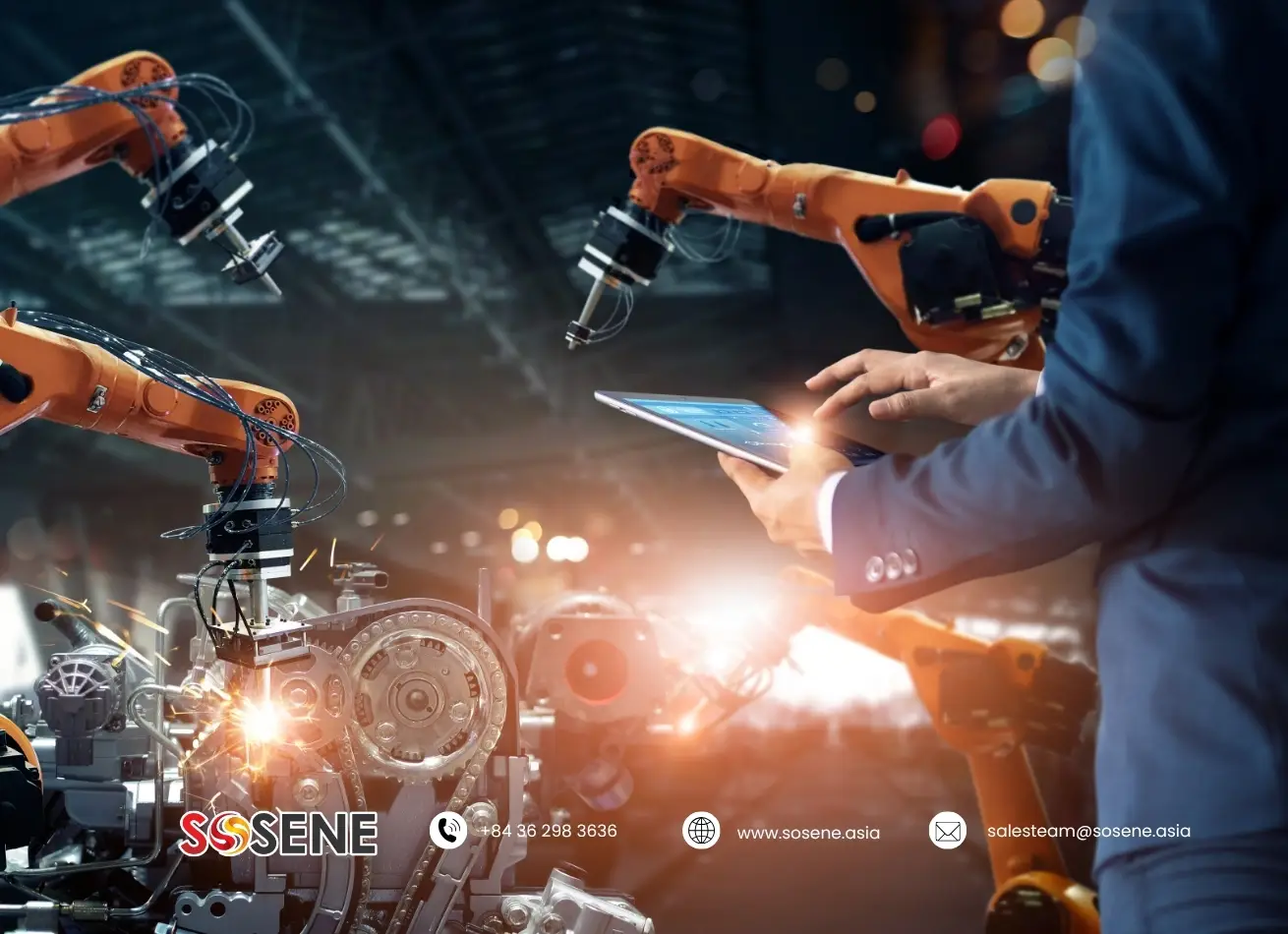
AI models detect anomalies and predict equipment failures before they occur.
This approach prevents costly downtime and extends asset lifespan.
Example: A factory in Penang reduced machine breakdowns by 27% after deploying AI-based vibration analysis.
Quality Control via Computer Vision
High-speed cameras and AI algorithms identify product defects that are invisible to the human eye.
The result is better yield, fewer recalls, and consistent quality across multiple facilities.
Supply Chain Optimization
AI forecasts demand, inventory, and logistics with greater precision, minimizing waste and improving delivery reliability.
This agility is especially critical in volatile global markets.
Energy Efficiency
AI analyzes production data to reduce idle power consumption and optimize resource usage. It directly contributes to both cost savings and sustainability goals.
Human-Machine Collaboration
AI integration empowers workers by providing real-time insights, safety alerts, and performance guidance. Productivity and morale improve as people and machines work together more effectively.
AI Integration Architecture: How It All Fits Together
The architecture behind successful AI manufacturing systems follows a layered logic that connects insight to action.
1. Data Layer
This layer consolidates IoT sensor data, ERP logs, and external feeds into a central data lake.
Data integrity and standardization are critical to ensure consistent outputs.
2. AI and Analytics Layer
Predictive models analyze data patterns and recommend operational adjustments, such as changing machine settings to prevent defects.
3. Automation Layer
Robotic systems execute AI recommendations instantly, creating a closed feedback loop between learning and execution.
4. Control and Orchestration Layer
Supervisory software monitors all activities and maintains coordination across lines and plants.
AI integration agencies like Sosene ensure orchestration aligns with the enterprise’s operational KPIs.
“E-commerce personalization is no longer an add-on. It’s the infrastructure of modern retail — where data, design, and intelligence converge to deliver measurable growth.”
Sosene Team
AI Integration Best Practices for Manufacturers
1. Start with Strategy, Not Software
Successful projects begin with a business-driven roadmap. Define clear use cases linked to measurable outcomes such as reducing downtime or energy waste before choosing tools.
2. Build Cross-Functional Teams
Integrate IT, operations, and data science teams early. Collaboration prevents silos and accelerates deployment.
3. Invest in Data Governance
AI systems depend on high-quality, consistent data. Establish strong protocols for validation, access control, and versioning.
4. Pilot, Measure, Scale
Run small, controlled pilots, measure ROI, and scale the ones that deliver clear value.
For example, begin with AI-powered predictive maintenance before expanding to supply chain optimization.
5. Partner with the Right AI Integration Agency
A trusted partner bridges the gap between AI integration architecture and business execution.
Sosene tailors AI solutions for multi-factory environments, ensuring security, scalability, and long-term value creation.
AI Integration and Business Strategy
For CEOs and COOs, the question is no longer if but how fast to adopt AI integration.
When aligned with corporate objectives such as cost optimization, risk reduction, or sustainability, AI becomes a strategic multiplier.
A Deloitte study shows that manufacturers investing in AI and automation achieve up to 40% higher operational efficiency than peers who delay adoption.
For SEA enterprises, this is a chance to leapfrog competitors and define new global benchmarks.
Conclusion
The future of manufacturing belongs to those who see AI as an operating system for decision-making.
SEA’s manufacturing leaders are proving that automation and AI integration can coexist with human expertise to create a new balance between speed, precision, and adaptability.
Sosene helps global enterprises design, implement, and scale AI integration strategies that turn data into productivity and innovation into measurable impact.
Ready to elevate your manufacturing efficiency with AI?
Book a consultation with Sosene and start your journey toward intelligent manufacturing excellence.
FAQs
What is AI integration?
AI integration connects artificial intelligence with existing systems and workflows to automate analysis, prediction, and decision-making.
How is AI integration different from automation?
Automation performs repetitive tasks, while AI integration adds intelligence, allowing systems to learn, adapt, and improve over time.
What are the main benefits of AI integration?
Higher efficiency, lower downtime, better quality control, and improved supply chain visibility.
How long does it take to implement AI integration in manufacturing?
Pilot programs can start within 3–6 months, with full integration typically achieved within 12–18 months.
Why choose Sosene as an AI integration agency?
Sosene combines AI architecture expertise, automation engineering, and regional manufacturing insight to ensure measurable and sustainable transformation.