Logistics operations today move at unprecedented speed. Cross-border trade, last-mile delivery, and real-time customer expectations have become standard. Yet the technology supporting many logistics companies has not evolved at the same pace.
Many organizations still rely on fragmented logistics applications, spreadsheets, emails, and manual coordination. These tools were built for record-keeping, not real-time decision-making.
As a result, visibility gaps, delayed responses, and operational friction are becoming systemic risks.
This is where web app development emerges as a strategic capability, not just an IT upgrade.
At Sosene, we work with logistics leaders who recognize that software now defines operational speed, resilience, and competitiveness.
Table of Contents
Key Takeaways
- Traditional logistics applications struggle to support real-time, multi-location operations.
- Fragmented systems increase cost, delay, and operational risk.
- Modern logistics web applications enable automation, visibility, and faster decisions.
- Custom web platforms scale more effectively than rigid enterprise tools.
- Sosene helps logistics companies design web applications aligned with real operational needs.
Further Reading
How Logistics Technology Is Commonly Used Today
Most logistics operations rely on a familiar setup. A transportation system for routing, a warehouse system for inventory, spreadsheets for exceptions, and email or phone calls for coordination.
This approach is widely accepted as normal. Teams often say, “We get the data at the end of the day,” or “We fix issues when they appear.”
These logistics applications were designed as static systems. Integration is often added later, and real-time visibility remains limited.
The immediate risk is not inefficiency. The immediate risk is losing operational control when something goes wrong.
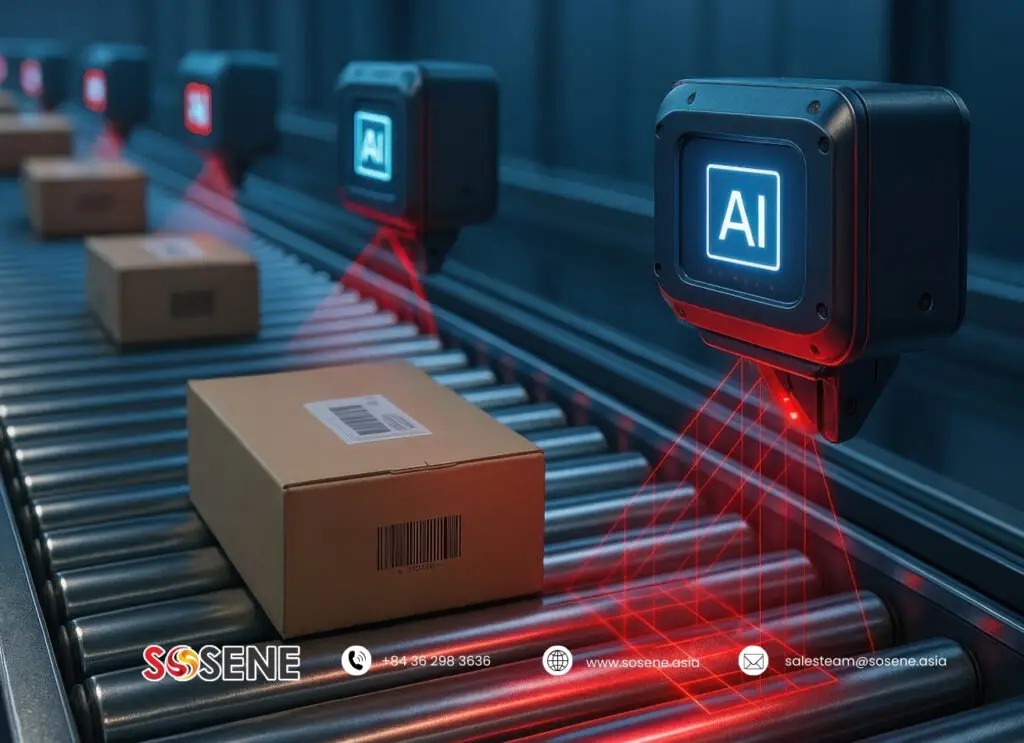
Logistics Systems Record the Past Instead of Managing the Present
Most legacy systems act like rear-view mirrors. They explain what already happened but offer little insight into what is happening now. Imagine running air traffic control with yesterday’s radar data. Planes are still flying, but decisions are always late.

From different perspectives, the problem looks like this:
- Operations teams lack real-time shipment and inventory visibility.
- Managers make decisions based on delayed or incomplete data.
- Customers receive updates that are already outdated.
- IT teams struggle to adapt rigid systems to changing workflows.
Traditional app or website development approaches focus on screens and features rather than operational flow. This limits their ability to support dynamic logistics environments.
Fragmented Systems Cause Measurable Damage
When systems cannot communicate in real time, logistics operations pay a direct cost. Organizations with fragmented platforms experience:
- Higher delivery exception rates.
- Increased manual handling and coordination costs.
- Slower response to disruptions such as port congestion or route changes.
- Lower customer satisfaction due to inaccurate tracking.
One regional logistics provider Sosene worked with relied on multiple disconnected platforms. A customs delay was not communicated to the warehouse in time. Inventory was staged incorrectly, drivers waited idle, and customer updates were delayed. The issue was not people. It was system design.
Web Applications as a Strategic Investment in Logistics
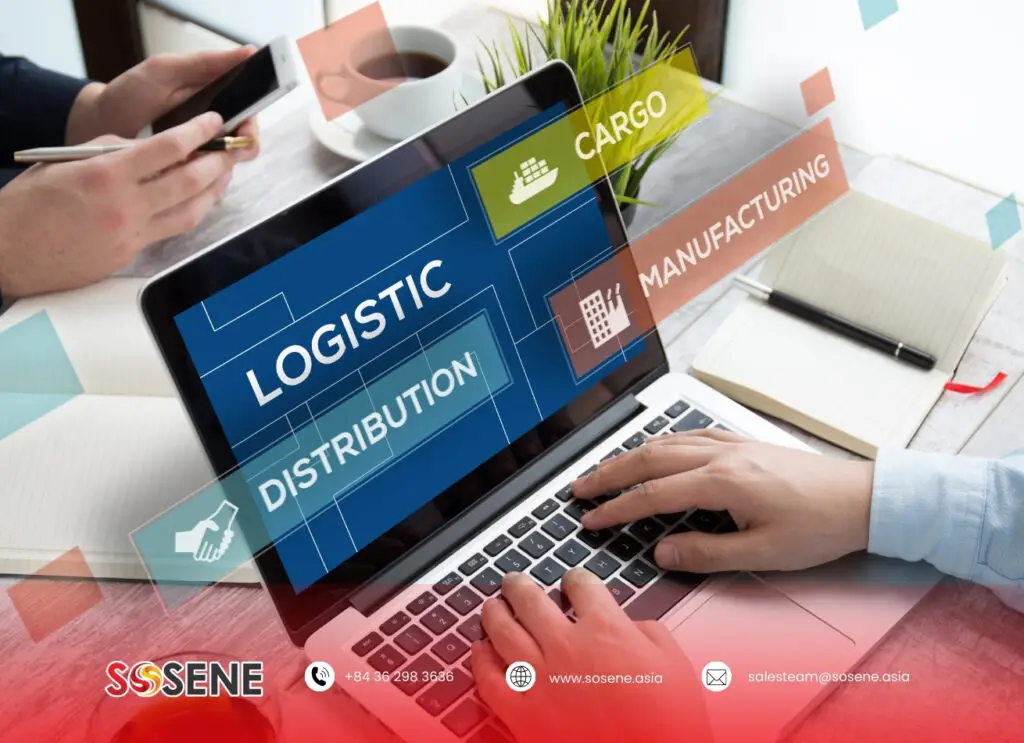
Web applications are no longer simple digital tools. They have become the operational layer that connects people, assets, and decisions.
A modern logistics web application enables:
- Process automation across transport, warehousing, and delivery.
- Real-time visibility into shipments, fleets, and exceptions.
- Faster, data-driven decision-making when disruptions occur.
In practice, a well-designed web platform becomes the nervous system of logistics operations. It connects transportation, inventory, billing, and customer communication into one continuous flow.
This is why leading logistics organizations now treat web app development as a long-term strategic investment.
Core Functionality of Modern Logistics Web Applications
A logistics web application must reflect real operational needs, not generic software assumptions. Common core capabilities include:
| Functionality | Description | Business Value |
|---|---|---|
| Real-Time Tracking and Visibility | Uses GPS and IoT signals to provide live updates on shipments, vehicles, and delivery milestones. | Improves operational visibility, reduces uncertainty, and enables faster response to disruptions. |
| Route Optimization and Predictive Planning | Applies AI-driven analytics to traffic, weather, and historical data to plan optimal routes. | Lowers fuel costs, shortens delivery times, and increases fleet efficiency. |
| Inventory and Warehouse Management | Automates stock updates, triggers low-inventory alerts, and optimizes warehouse layout and picking flows. | Reduces inventory errors, minimizes holding costs, and improves warehouse productivity. |
| Automated Dispatch and Order Management | Automatically assigns orders to drivers or carriers based on capacity, location, and priority rules. | Cuts manual coordination, accelerates dispatch decisions, and reduces human error. |
| Communication and Collaboration Tools | Integrates messaging, notifications, and task updates across drivers, dispatchers, warehouse teams, and customers. | Keeps all stakeholders aligned in real time and reduces miscommunication. |
| Analytics and Reporting | Provides dashboards, alerts, and performance reports on delivery, utilization, and exceptions. | Enables data-driven decision-making and proactive issue resolution. |
| Automated Billing and Invoicing | Connects operational events directly to billing and invoicing systems. | Improves billing accuracy, shortens cash cycles, and simplifies financial reconciliation. |
| Customer Portals | Offers customers real-time shipment tracking, status updates, and document access. | Enhances customer experience and reduces support workload. |
The Business Benefits of Custom Logistics Web Applications

Developing a custom web application for logistics delivers clear advantages.
Increased Efficiency
Automation streamlines workflows and reduces manual handling across operations.
Reduced Costs
Optimized routing, improved asset utilization, and automated processes lower fuel, labor, and coordination expenses.
Improved Transparency and Auditability
Centralized logs and real-time tracking support compliance, accountability, and faster dispute resolution.
Scalability
Cloud-based platforms scale seamlessly with fleet size, order volume, and geographic expansion.
Lower Total Cost of Ownership
Custom logistics web applications deliver greater adaptability and long-term cost efficiency compared to rigid enterprise platforms.
How Logistics Web Applications Are Built
Successful logistics web app development follows a clear, structured lifecycle:
- Requirement Analysis
Identify operational pain points, exception scenarios, and measurable performance goals. - Design and Prototyping
Design intuitive interfaces for dispatchers and drivers, supported by scalable system architecture. - Development and Testing
Build on a robust tech stack with rigorous performance, security, and integration testing. - Deployment and Continuous Optimization
Launch incrementally with ongoing monitoring, updates, and performance improvements.
At Sosene, logistics web applications are built to evolve continuously, ensuring long-term adaptability rather than static deployment.
Critical Challenges to Address
- Connectivity and Offline Operations
Logistics teams operate in low-signal environments. Offline access and reliable data synchronization are essential. - Regulatory and Data Compliance
Transport and data privacy regulations vary by market and must be embedded from the start. - Integration with Existing Systems
Seamless integration with ERP, TMS, carrier APIs, and partner platforms is critical.
Sosene approach: API-first architecture combined with region-aware compliance ensures resilience, scalability, and regulatory alignment.
Why Sosene for Logistics Web App Development

Sosene supports logistics growth through an integrated consulting and delivery model:
- Strategy and Transformation
Align technology initiatives with operational and business goals. - Customer Experience and Digital Enablement
Strengthen client relationships through connected platforms and real-time communication. - Innovation and Product Development
Design and build logistics web applications that adapt as operations evolve. - Platforms and Technology
Deliver scalable, secure, and integration-ready systems. - Data and Intelligence
Turn operational data into actionable insights. - Optimized Global Delivery
Support regional compliance and cross-border operations with confidence.
Together, these capabilities position Sosene as a long-term strategic partner for logistics organizations focused on sustainable growth and operational excellence.
Conclusion
Logistics will always involve physical movement. But the speed and reliability of that movement now depend on digital coordination.
Companies that invest in modern web applications gain visibility, control, and resilience. Those that do not will struggle to keep pace.
Web app development is no longer an IT decision. It is an operational strategy. Sosene helps logistics organizations build web applications that turn complexity into control and support long-term growth.
FAQs
What is web app development for logistics operations?
It is the creation of web-based platforms that manage logistics workflows, assets, and data in real time.
Why are traditional logistics applications failing?
They lack real-time visibility, adaptability, and integration.
What features should logistics web applications include?
Real-time tracking, route optimization, inventory management, dispatch automation, analytics, billing, and customer portals.
How does Sosene help?
Sosene designs custom logistics web applications that integrate existing systems and scale with operational growth.