
Rethinking Digital Transformation in Education
Digital transformation in education is often misunderstood as a technology race. New platforms, new tools, new features. Yet the institutions that truly transform are rarely the ones that adopt the most technology, but the ones that adopt technology with the clearest intent.
This article is written for education leaders, edtech founders, and organizations exploring web apps development as a strategic lever rather than a technical task. The real question is not what can we build, but what learning experience should exist, and how technology can quietly support it.
Smart web applications are increasingly becoming the backbone of modern education. When designed with purpose, they enable accessibility, personalization, and insight without overwhelming learners or educators. This piece explores how thoughtful web development for education is driving meaningful, sustainable transformation, and what that means for organizations planning their next step forward.
Table of Contents
Key Takeaways
- Smart web apps are foundational to scalable, future-ready education systems.
- Accessibility and flexibility are strategic advantages, not just UX features.
- Personalization emerges from data clarity, not complexity.
- Engagement improves when interaction aligns with learning outcomes.
- Sustainable transformation starts with focus, not feature overload.
Further Reading
Smart Web Apps as the Foundation of Modern Learning
Accessibility as an Educational Principle, Not a Feature
In education, accessibility is not merely a technical requirement. It is an equity principle. Smart web applications remove friction by design. There are no downloads, no device lock-in, and no fragmented experiences.
Through browser-based access, web apps development enables learning to happen wherever context allows, on campus, at home, or in transition. This flexibility supports blended and remote learning models while maintaining consistency across users.
What is often overlooked is how accessibility directly impacts adoption. Platforms that reduce entry barriers see higher engagement, not because they are more advanced, but because they respect the learner’s time and context.
Personalization Through Insight, Not Assumption
Personalized learning is frequently framed as an AI challenge. In reality, it is an insight challenge. Smart education web apps create value by observing learning behavior, not by predicting it prematurely.

By structuring data around progress, interaction, and feedback, web development education platforms allow learning paths to evolve naturally. Educators can identify patterns early. Learners receive guidance that feels supportive rather than prescriptive.
True personalization emerges when systems are designed to listen first. Advanced algorithms may come later, but clarity always comes before complexity.
Engagement That Serves Learning Outcomes
Engagement is often mistaken for stimulation. Gamification, quizzes, and collaboration tools only add value when they reinforce learning intent.
Smart web apps use interactivity to deepen understanding, not distract from it. Discussion spaces encourage reflection. Real-time collaboration builds context. Interactive assessments provide immediate clarity.

The role of a web apps development company in education is not to maximize features, but to curate interactions that matter. Engagement, when aligned with pedagogy, becomes a multiplier rather than a metric.
“In education, the most engaging platforms are often the quietest ones, where interaction feels natural, not forced.”
Sosene Team
Learning Management Systems as Strategic Infrastructure
Beyond Administration: The Modern LMS

Learning Management Systems have evolved from administrative tools into strategic platforms. Modern, cloud-based LMS solutions built through education mobile app services, adapted for web use, unify content, communication, and evaluation into a coherent experience.
For educators, this reduces cognitive load. For institutions, it improves operational visibility. For learners, it creates a predictable, supportive structure.
Custom web-based LMS platforms are particularly valuable where differentiation, regional compliance, or integration with existing systems is required. They reflect the institution’s philosophy, not just its processes.
Data as a Tool for Continuous Improvement
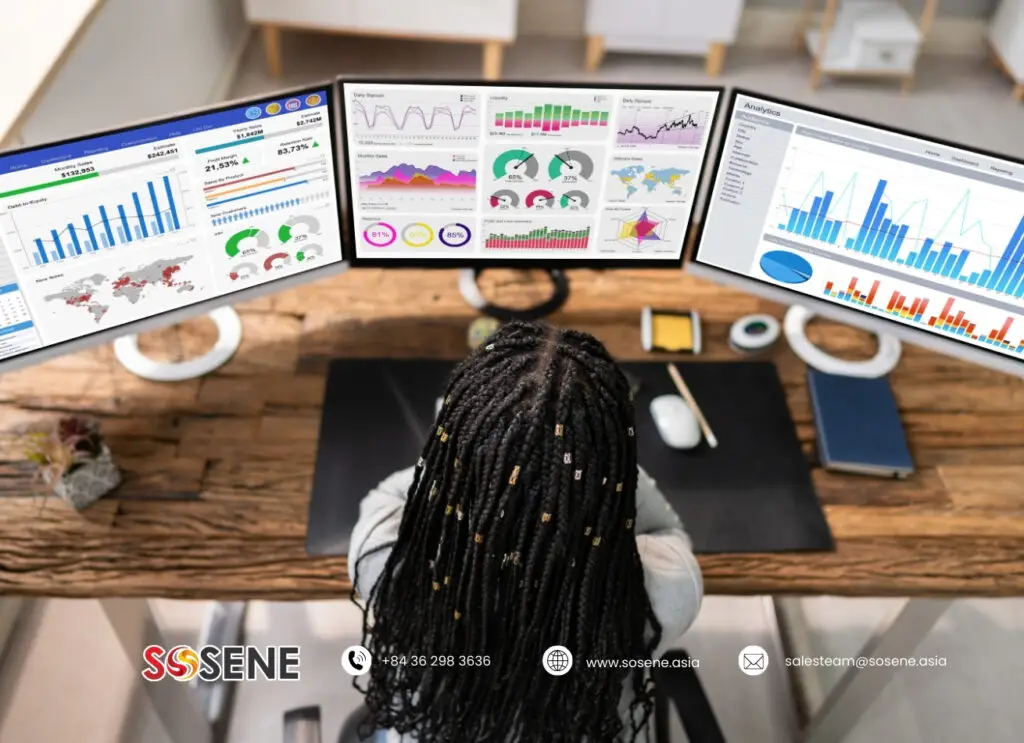
One of the most transformative aspects of smart web apps is their ability to make learning visible. Analytics dashboards turn abstract engagement into tangible insight.
Administrators can see where learners struggle. Educators can adjust pacing and content. Programs can evolve based on evidence rather than intuition.
This shift, from static delivery to continuous improvement, is where digital transformation becomes meaningful.
Extending the Learning Ecosystem with Emerging Technologies
Designing for What Comes Next
Smart web apps provide a stable foundation for integrating emerging technologies such as AR, VR, and secure digital credentials. Importantly, these integrations work best when they extend existing learning flows rather than redefine them.
AR enhances experiential learning. VR simulates environments otherwise inaccessible. Blockchain secures credentials and trust. None of these replace education fundamentals, but all of them benefit from a flexible, web-based core.
Future-ready education platforms are rarely built in anticipation of trends. They are built with architectures that can adapt as needs evolve.
Real-World Signals from Education Practice
Institutions worldwide are already applying these principles. For example, University College London has leveraged learning design platforms to help educators structure and refine teaching activities based on real feedback and outcomes.
Elsewhere, AI-assisted recommendation systems embedded in web learning platforms have quietly improved attendance and assignment completion. The improvement comes not through pressure, but through relevance.
These examples reinforce a simple truth. Transformation happens when technology supports human decision-making, not when it replaces it.
How Sosene Supports Thoughtful Education Web App Development

Digital transformation in education works best when technology decisions are grounded in clarity, not urgency. This is where Sosene positions itself, not as a vendor delivering features, but as a strategic partner helping education organizations make the right decisions first.
As a Sosene, we work with education providers, training organizations, and edtech teams to translate learning goals into well-structured web applications that scale over time. Our approach begins with understanding how learning actually happens inside your organization, then shaping technology around those realities.
Rather than pushing full-scale platforms from day one, Sosene helps teams identify core learning workflows, user journeys, and data signals that matter most. From there, we design and build smart, browser-based applications that are accessible, adaptable, and ready to evolve.
Our education-focused services typically support organizations across three strategic layers:
- Education Web App Strategy and Architecture
Clarifying platform scope, defining user roles, and designing scalable system architecture aligned with long-term learning objectives. - Smart Web Apps Development for Education
Building custom web applications, LMS components, and learning portals that prioritize usability, performance, and insight over feature overload. - Continuous Improvement and Optimization
Supporting analytics integration, UX refinement, and iterative enhancements as real learner data becomes available.
This way of working allows education teams to move forward with confidence, reduce unnecessary complexity, and ensure that every development step serves a clear educational purpose.
See how we helped Little Angel Language Center digitizing language center operations with a custom school management platform. Read full case study of Little Angel Language Center custom software solution
Conclusion
Smart web apps development is not about building faster or bigger platforms. It is about building clearer ones. Platforms that respect learners, empower educators, and give institutions the insight they need to improve continuously.
Education leaders who succeed in digital transformation tend to ask better questions before they write a single line of code. They focus on learning journeys, not just features. They value adaptability over completeness.
For organizations exploring web development for education, the opportunity lies in starting with intention, defining what matters most, designing around real users, and allowing systems to grow organically over time.
If your institution or edtech initiative is at the stage of clarifying direction, aligning stakeholders, or exploring what a smart web-based learning platform could look like in practice, a focused conversation can often bring more clarity than a full specification document.
That clarity is where meaningful transformation begins.
FAQs
What makes a web app smart in education?
A smart education web app prioritizes accessibility, insight, and adaptability, using data to continuously improve learning experiences.
Why are web apps preferred over native apps in education?
Web apps reduce friction, work across devices, and simplify maintenance while supporting scalable learning models.
How do smart web apps support personalized learning?
They capture and analyze learner behavior, enabling adaptive content and timely educator intervention.
Can smaller education organizations benefit from custom web apps?
Yes. Focused, well-designed platforms often deliver more value than complex, generic solutions.
What should education leaders consider before starting development?
Learning objectives, user experience, data visibility, and long-term adaptability should guide all technical decisions.