
Education technology has rapidly transformed how schools, universities, and training organizations deliver learning experiences. Platforms built through education software development now power learning management systems, AI tutoring tools, mobile learning apps, and digital classrooms used by millions of students worldwide.
However, the rapid adoption of digital learning systems has also introduced new security and privacy risks. Educational platforms collect and store sensitive information such as student identities, academic records, behavioral analytics, and communication data.
According to IBM’s Cost of a Data Breach Report, the average breach in the education sector exceeded $3 million in 2023, making cybersecurity a major concern for educational institutions.
For organizations investing in education software development services, security must be integrated into system architecture from the beginning rather than added after deployment.
This article explores the most common security and privacy risks in educational software development and outlines practical strategies for building safer EdTech platforms.
Table of Contents
Key Takeaways
- Educational platforms manage highly sensitive student data and are frequent targets for cyberattacks.
- Major risks include data breaches, insecure data storage, third-party integrations, AI monitoring concerns, and phishing attacks.
- Poor security design in educational software development can lead to compliance violations and reputational damage.
- Implementing encryption, data minimization, and vendor governance significantly reduces risks.
- Institutions should prioritize secure-by-design education software development services to protect learners and educators.
Further Reading
Major Security and Privacy Risks in Education Software
Educational platforms rely on complex ecosystems that combine cloud infrastructure, mobile applications, analytics systems, and third-party services. While these technologies improve accessibility and learning outcomes, they also introduce multiple security vulnerabilities.
The following table summarizes the most common security and privacy risks in education software development.
| Risk | Description | Potential Impact |
|---|---|---|
| Data breaches | Unauthorized access to student records and institutional databases | Identity theft, ransomware attacks |
| Insecure data storage | Weak encryption or misconfigured cloud infrastructure | Exposure of sensitive information |
| Third-party data sharing | Data shared with vendors without clear governance | Privacy violations and compliance issues |
| AI monitoring risks | AI tools collecting biometric or behavioral data | Ethical and privacy concerns |
| Phishing attacks | Social engineering targeting students or staff | Credential theft and system compromise |
Data Security Challenges in Educational Platforms
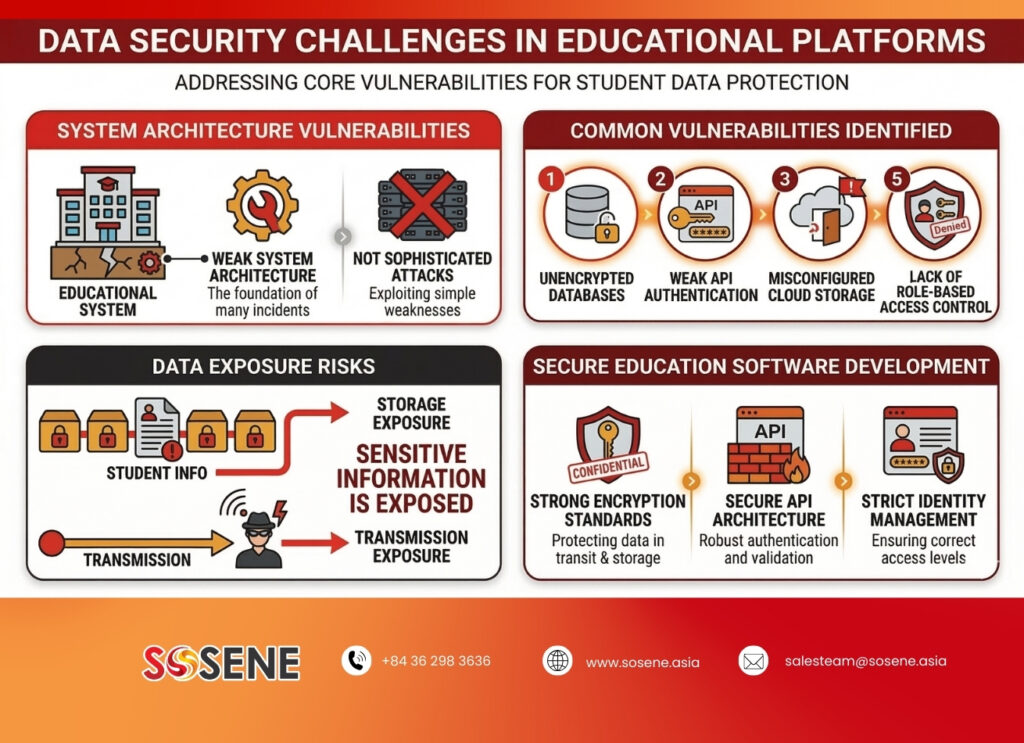
Many security incidents occur not because of sophisticated attacks but because of weak system architecture.
Common vulnerabilities include:
- Unencrypted student databases
- Weak API authentication
- Misconfigured cloud storage
- Poor session management
- Lack of role-based access control
These issues can expose sensitive student information during both data storage and data transmission.
Secure education software development must therefore implement strong encryption standards, secure API architecture, and strict identity management systems.
AI Monitoring and Student Privacy Concerns
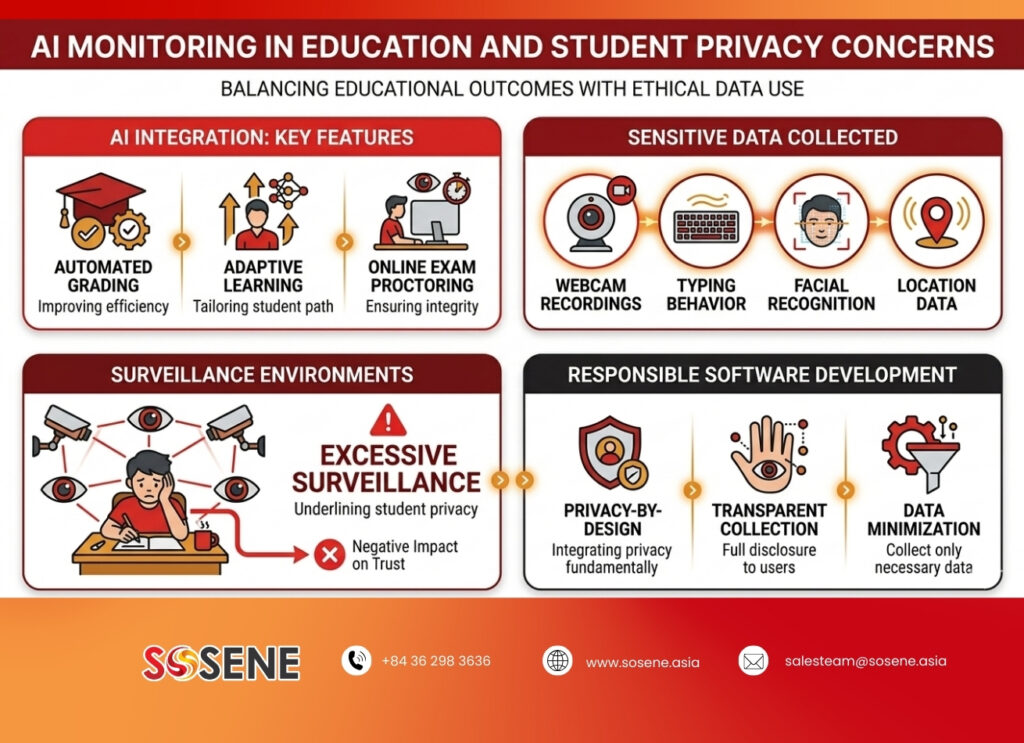
Artificial intelligence is increasingly integrated into modern learning platforms. Features such as automated grading, adaptive learning, and online exam proctoring help improve educational outcomes.
However, these systems can collect sensitive data including webcam recordings, typing behavior, facial recognition information, and location data.
If poorly designed, AI monitoring systems may create excessive surveillance environments that undermine student privacy.
Responsible educational software development should apply privacy-by-design principles, ensuring that data collection is transparent, limited, and necessary for learning objectives.
Best Practices for Secure Education Software Development
Organizations can significantly reduce cybersecurity risks by implementing structured security practices during development.
| Security Practice | Purpose |
|---|---|
| Data minimization | Collect only the information required for learning functions |
| Strong encryption | Protect data both in transit and at rest |
| Multi-factor authentication | Prevent unauthorized account access |
| Vendor security assessments | Ensure third-party tools follow security standards |
| Cybersecurity training | Help educators and students recognize phishing attacks |
These practices help create resilient digital learning environments and are increasingly expected in professional education software development services.
How Sosene Supports Secure Education Software Development
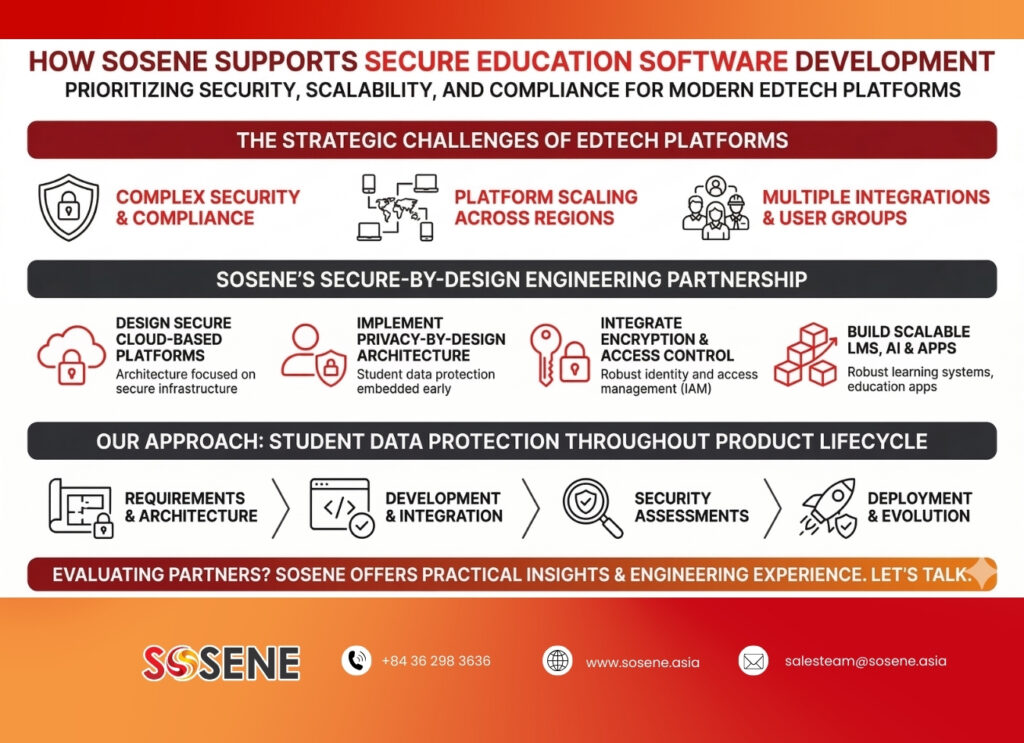
For organizations building modern EdTech platforms, security and compliance often become complex challenges—especially when platforms scale across multiple regions, integrations, and user groups.
This is where experienced engineering partners can provide strategic value.
At Sosene, our teams support organizations with education software development services that prioritize security, scalability, and regulatory compliance from the beginning of the architecture.
Our engineering teams help clients:
- Design secure cloud-based EdTech platforms
- Implement privacy-by-design system architecture
- Integrate encryption, identity management, and access control
- Build scalable LMS, AI learning systems, and education apps
- Conduct security assessments for educational platforms
Instead of treating cybersecurity as a post-launch fix, our approach focuses on secure-by-design educational software development, ensuring that student data protection and compliance requirements are embedded throughout the product lifecycle.
If you’re evaluating partners for building or scaling secure learning platforms, Sosene can share practical insights and engineering experience from real-world education technology projects.
Conclusion
As digital learning ecosystems expand, education software development has become foundational infrastructure for modern education systems.
However, these platforms manage vast volumes of sensitive data—from student identities and academic records to behavioral analytics and AI-driven learning insights.
Without strong security architecture, educational platforms face growing risks including data breaches, phishing attacks, unauthorized data sharing, and privacy violations.
Organizations investing in education software development services must treat security and privacy as core design principles rather than afterthoughts.
By implementing encryption, secure architecture, compliance frameworks, and vendor governance, institutions can build trustworthy EdTech platforms that protect learners while enabling innovation.
Ultimately, the success of digital education depends not only on technology—but on the ability to safeguard the data and privacy of the students it serves.
FAQs
Why is security important in education software development?
Education platforms store sensitive student data such as identities, academic records, and behavioral analytics. Strong security protects this information from breaches and cyberattacks.
What are the biggest privacy risks in educational software?
Common risks include unauthorized data sharing, excessive data tracking, insecure storage, AI surveillance concerns, and vulnerabilities in third-party integrations.
How can educational platforms prevent data breaches?
Implementing encryption, secure APIs, access control systems, and regular security audits significantly reduces the risk of breaches.
What regulations affect educational software privacy?
Major regulations include FERPA, COPPA, and GDPR, which define how student data must be collected, stored, and protected.
How does AI affect privacy in education software?
AI systems often collect behavioral or biometric data. Developers must ensure transparent consent and limit data collection through privacy-by-design principles