Asia is now the global center of manufacturing. From Vietnam and Thailand to China and India, factories fuel worldwide supply chains. Yet many manufacturers still depend on outdated systems, spreadsheets, and disconnected tools that slow down operations and limit growth.
Modern ERP software for manufacturers solves these challenges by delivering unified, real-time visibility across production, finance, supply chain, and quality. These systems are no longer limited to large enterprises. Cloud technology now allows small and mid-sized factories to access advanced capabilities at manageable costs.
The shift toward cloud ERP, AI-enabled forecasting, and integrated shop floor execution makes ERP one of the most important investments for manufacturers in Asia today.
Table of Contents
Key Takeaways
- Modern ERP software improves speed, accuracy, and efficiency across manufacturing operations.
- Top ERP systems combine cloud, AI, MES integration, and industry-specific workflows.
- Vietnamese ERP partners offer strong expertise, cost efficiency, and local compliance support.
- Small manufacturers benefit from better planning, visibility, and scalable digital operations.
- Sosene delivers ERP implementations tailored to manufacturing across Asia.
What Modern ERP Software Looks Like Today
Modern ERP systems go beyond basic accounting or inventory management. They unify every workflow into a single platform, create real-time visibility, and help leaders make faster and more accurate decisions.
Leading modern ERP solutions used by manufacturers in Asia include:
- SAP S4/HANA for large enterprises
- Oracle NetSuite for fast-growing businesses
- Microsoft Dynamics 365 for flexible cloud adoption
- Infor CloudSuite Industrial for industry-specific processes
- Epicor Kinetic for discrete and mixed-mode manufacturing
These systems use cloud architecture, integrated analytics, and AI-driven models to streamline production, supply chains, and financial management.
What Modern ERP Software Looks Like Today
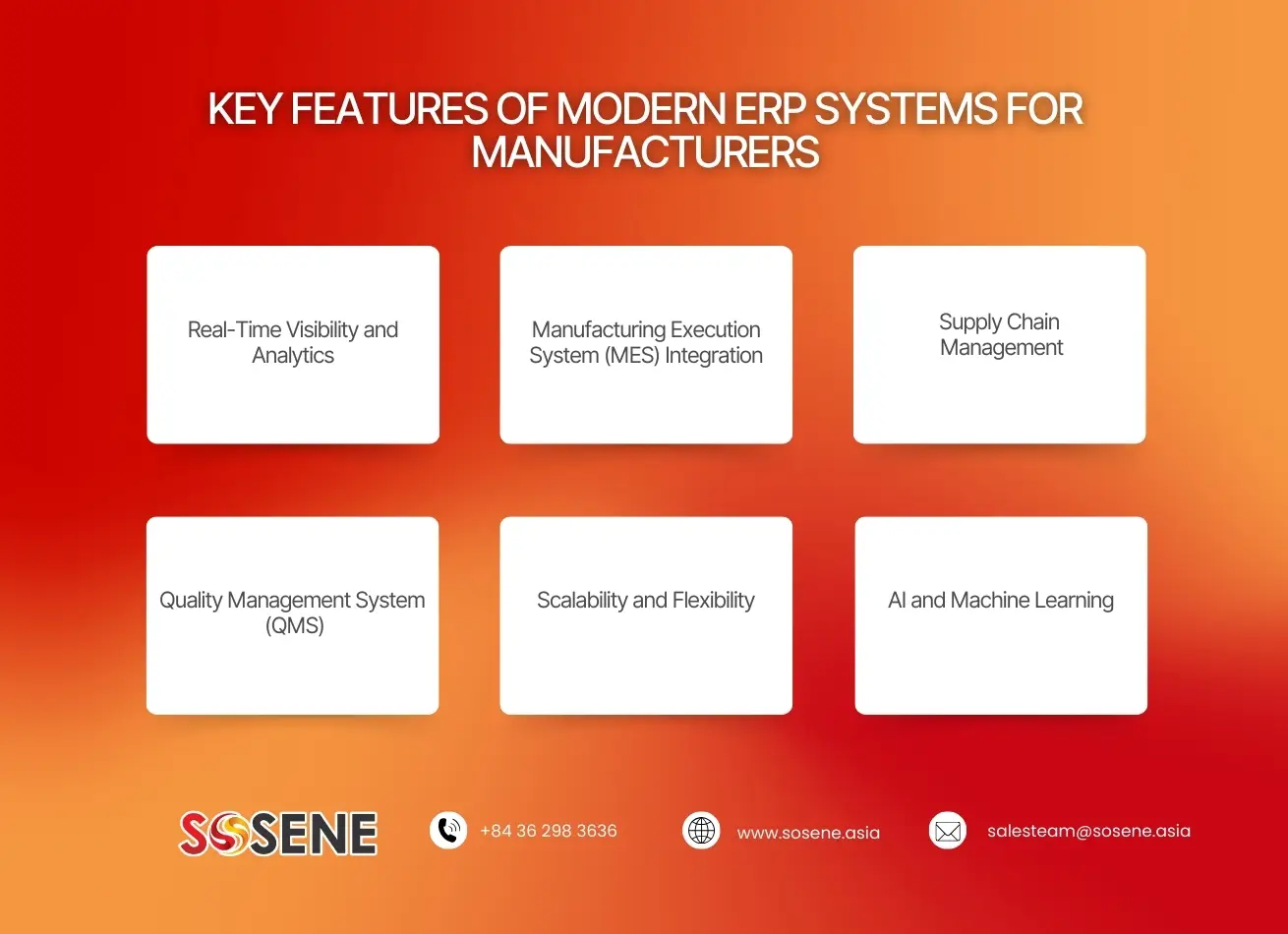
Manufacturing in Asia is diverse, fast-moving, and often export-focused. ERP systems must support multi-language environments, multi-currency transactions, and country-specific compliance. Below are the essential features manufacturers should expect.
Real-Time Visibility and Analytics
ERP platforms provide dashboards that show production status, inventory levels, and financial performance. Leaders can act quickly without waiting for manual reports.
Manufacturing Execution System (MES) Integration
ERP connected with MES provides accurate shop floor monitoring. This helps maintain quality, reduce delays, and track every operation from raw materials to finished goods.
Supply Chain Management
Asia’s supply chains are complex and distributed. ERP systems optimize procurement, supplier coordination, logistics, and order fulfillment.
Quality Management System (QMS)
Quality modules ensure compliance with ISO standards, automotive requirements, aerospace certifications, and other industry regulations.
Scalability and Flexibility
Cloud-based ERP systems scale easily as factories expand, open new plants, or increase production volumes.
AI and Machine Learning
AI improves demand forecasting, inventory accuracy, predictive maintenance, and automated scheduling.
Why Manufacturers Are Choosing ERP Partners in Vietnam
Vietnam is becoming one of the most attractive ERP implementation hubs in Asia. Companies choose Vietnamese partners for several strategic reasons.
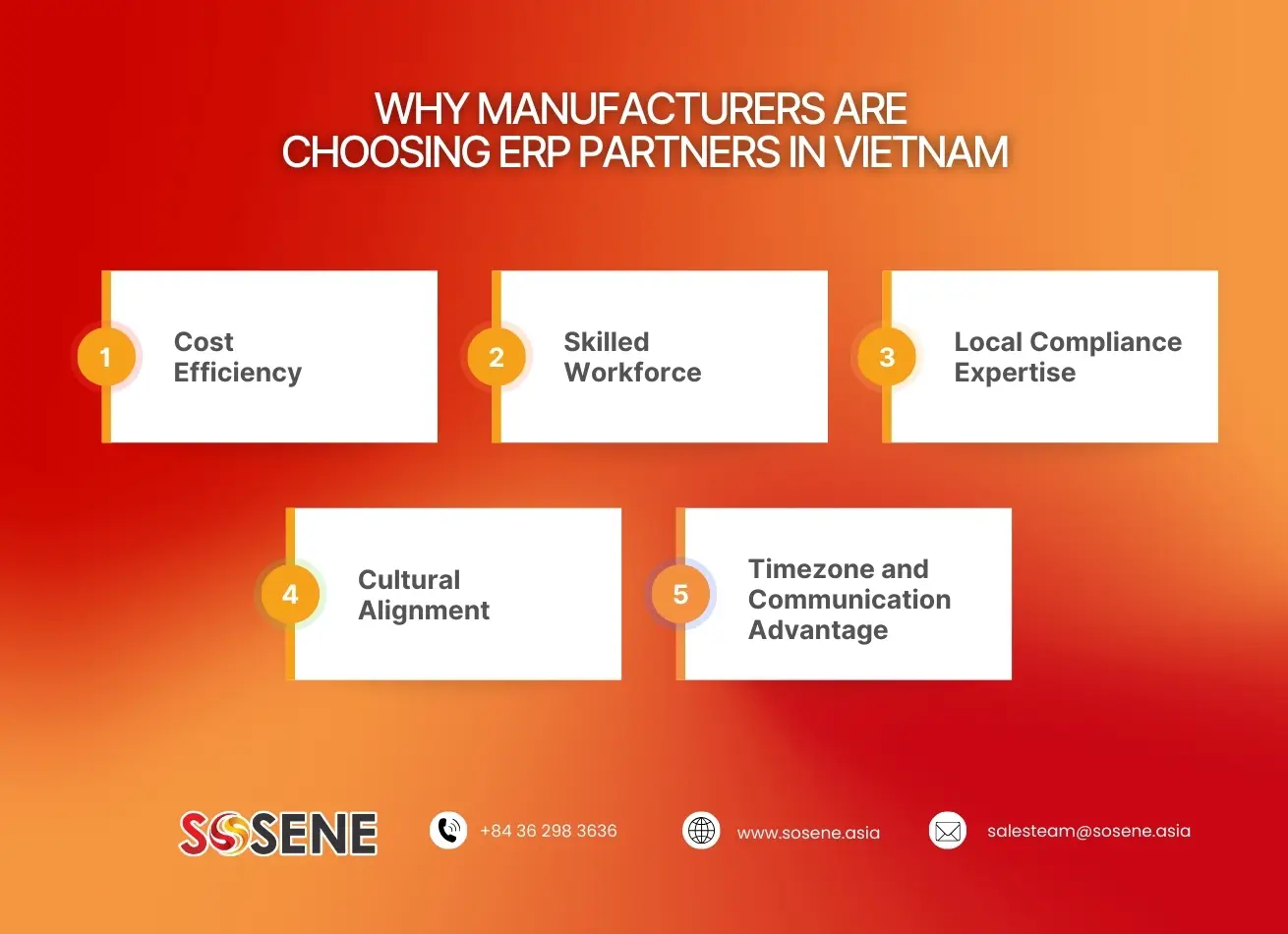
Cost Efficiency
Vietnam offers competitive pricing for ERP consulting, development, and long-term support.
Skilled Workforce
The country has a growing pool of certified ERP specialists with experience in SAP, NetSuite, Microsoft Dynamics, and custom ERP frameworks.
Local Compliance Expertise
Vietnamese partners understand VAS accounting, e-invoicing requirements, local tax regulations, and regional business culture.
Cultural Alignment
Vietnamese teams are known for adaptability, collaboration, and continuous improvement.
Timezone and Communication Advantage
Teams work in time zones that support both Asian and global operations, and many speak fluent English.
Why ERP Matters for Small Manufacturing Companies
ERP is no longer limited to large factories. Cloud ERP systems allow small manufacturers to digitize and scale without large IT investments.
Key benefits:
- Centralized Data improves coordination across departments.
- Operational Efficiency reduces manual work and eliminates redundant processes.
- Real-Time Visibility helps teams make accurate decisions.
- Scalability supports new product lines and increased production volume.
- Compliance and Quality Tracking ensures consistent standards.
Is Your Small Manufacturing Business Ready for ERP?
You may be ready if you face one or more of the following issues:
- Heavy reliance on spreadsheets
- Frequent stockouts or inventory errors
- Difficulty tracking production status
- Lack of real-time reporting
- Teams overwhelmed by manual tasks
- Growing customer demand that current systems cannot support
How to Choose the Right ERP System
Choosing the right ERP is essential for long-term success. Use these steps to guide your selection.
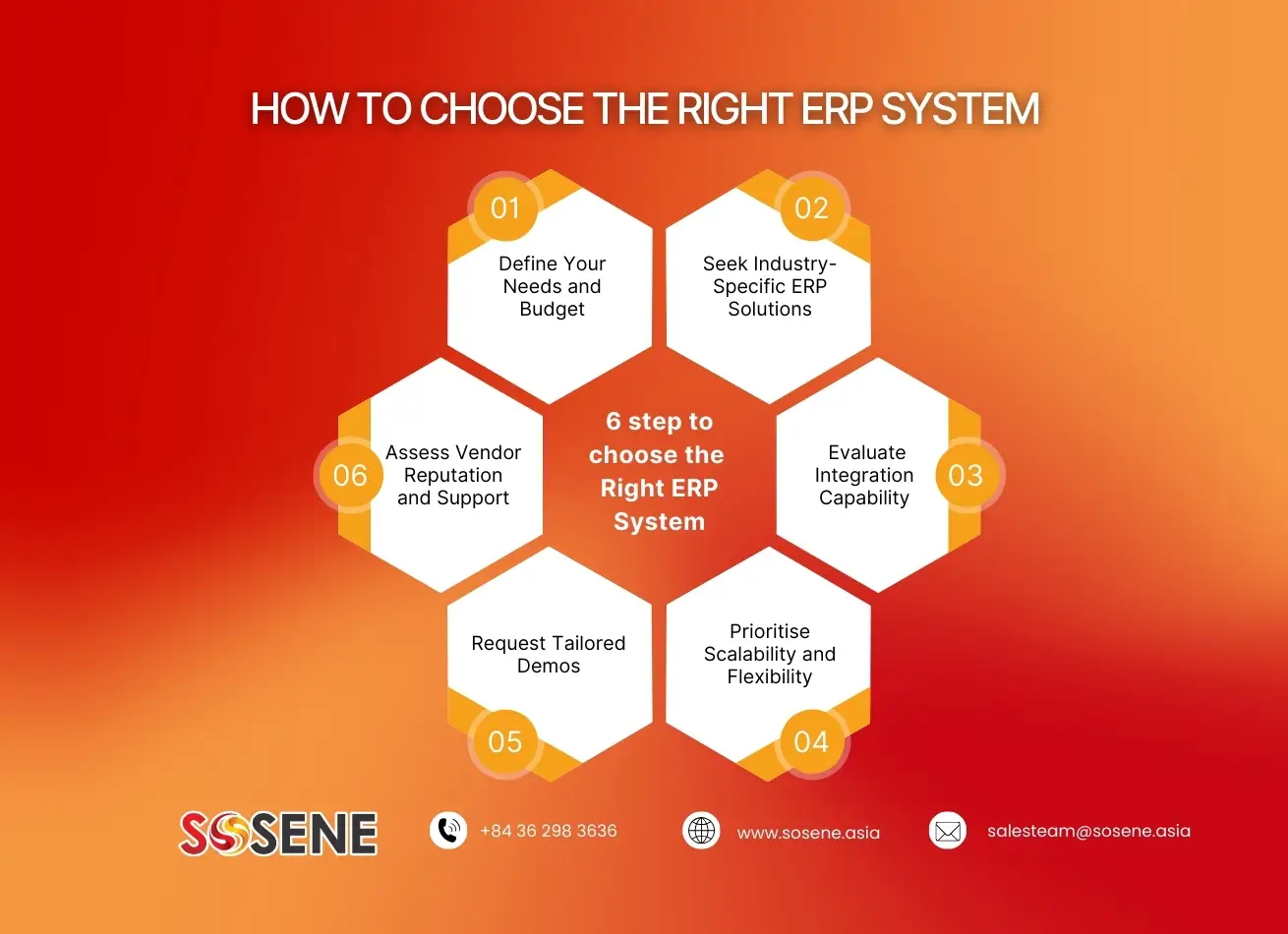
1. Define Your Needs and Budget
Document pain points and prioritise features based on ROI.
2. Seek Industry-Specific ERP Solutions
Choose a system designed for manufacturing workflows, not a generic business ERP.
3. Evaluate Integration Capability
Your ERP should connect easily with MES, CRM, HRM, logistics software, and financial tools.
4. Prioritise Scalability and Flexibility
A cloud solution ensures long-term adaptability as your business grows.
5. Request Tailored Demos
Ask vendors to demonstrate real manufacturing scenarios based on your processes.
6. Assess Vendor Reputation and Support
Strong partners provide training, aftercare, and ongoing optimisation.
Why Sosene Is the Best Fit for Manufacturers in Asia
Sosene helps manufacturers modernize their operations with ERP solutions designed for Asia’s fast-changing industrial environment.

Deep Manufacturing Expertise
We understand discrete, process, and mixed-mode manufacturing across Vietnam, Thailand, Singapore, and regional markets.
Support for Global and Custom ERP
We implement SAP, Microsoft Dynamics, and NetSuite, and also build custom manufacturing ERP systems tailored to unique production models.
AI-Enabled ERP Enhancements
Our ERP solutions integrate predictive analytics, automated workflows, and machine learning for smarter decision-making.
Strong Local and Regional Competence
We ensure compliance with local tax rules, financial regulations, and cross-border reporting requirements.
Cost-Effective Delivery with High Quality
Clients work with a skilled engineering team at competitive rates, without sacrificing performance or international standards.
Long-Term Partnership Model
Sosene provides continuous updates, user training, and improvement support for lasting value.
Conclusion
Manufacturers across Asia need systems that support efficiency, visibility, and global competitiveness. Modern ERP software offers the foundation for digital transformation, whether in small factories or multinational plants.
Sosene helps manufacturers adopt ERP systems that improve productivity, reduce errors, and enable automation. With strong technical expertise and deep regional knowledge, we deliver ERP solutions that scale with your business.
Partner with Sosene to modernize your manufacturing operations with the right ERP system for long-term growth.
FAQs
What is modern ERP software for manufacturers?
Modern ERP software for manufacturers is an integrated platform that manages production, inventory, finance, supply chain, and quality in one system. It often runs in the cloud and includes advanced capabilities such as real-time analytics, MES integration, and AI-based forecasting.
How is modern ERP different from traditional ERP systems?
Traditional ERP systems are often on-premise, rigid, and difficult to scale. Modern ERP solutions are cloud-based, easier to integrate, and support multi-location operations, mobile access, and AI-driven insights. This makes them more suitable for fast-growing manufacturers in Asia.
What is the best ERP software for manufacturing in Asia?
The best ERP software for manufacturing depends on company size, complexity, and industry. Many Asian manufacturers use SAP S4/HANA, Oracle NetSuite, Microsoft Dynamics 365, Epicor, or Infor. Others prefer custom manufacturing ERP tailored to their specific processes and local compliance needs.
Why should small manufacturers invest in ERP manufacturing software?
Small manufacturers benefit from ERP because it centralises data, reduces manual work, and improves accuracy in planning, purchasing, and production. It also supports future growth by providing a scalable digital backbone for operations.
What is custom manufacturing ERP?
Custom manufacturing ERP is a tailored system built around a company’s unique workflows, products, and reporting needs. It can include specialised features such as project-based production, engineer to order, or integration with proprietary machines and legacy systems.
Why work with ERP partners in Vietnam and Sosene in particular?
ERP partners in Vietnam offer strong technical skills, cost efficiency, and local knowledge of regulations and accounting standards. Sosene combines this regional strength with global ERP experience, AI expertise, and a long-term partnership approach that supports manufacturers across Asia.