Table of Contents
Key Takeaways
- Managed IT services shift execution responsibility while regulatory accountability remains fully with the healthcare organization.
- Compliance pressure amplifies operational risk when internal IT capacity cannot scale with regulatory change.
- This operating model trades day-to-day control for stability, predictability, and access to specialized capability.
- Governance quality determines whether managed IT services reduce or increase compliance exposure.
- The decision should reflect operating maturity and risk tolerance rather than short-term cost efficiency.
Managed IT Services in the Healthcare Operating Context
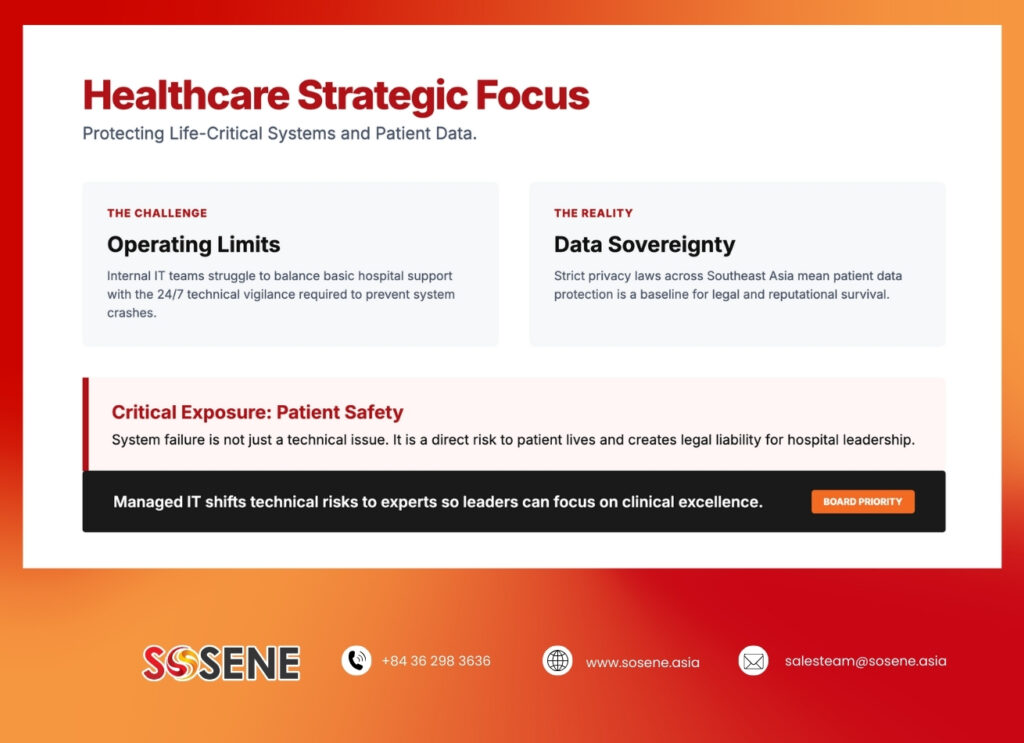
Healthcare organizations across Southeast Asia operate under sustained regulatory scrutiny while accelerating digital adoption. Patient data protection, system availability, and audit readiness are no longer technical concerns alone. They now directly shape reputational risk, financial exposure, and executive accountability.
Many healthcare leaders face a widening gap between regulatory expectations and internal execution capacity. Compliance frameworks evolve faster than internal IT teams can adapt. This creates latent operational risk even when clinical performance remains stable.
In this environment, managed IT services emerge as a structural response to operating strain. They are often considered not because technology fails, but because internal operating models reach their practical limits. The decision reflects business reality rather than technical ambition.
What Managed IT Services Mean for Healthcare Decision-Makers
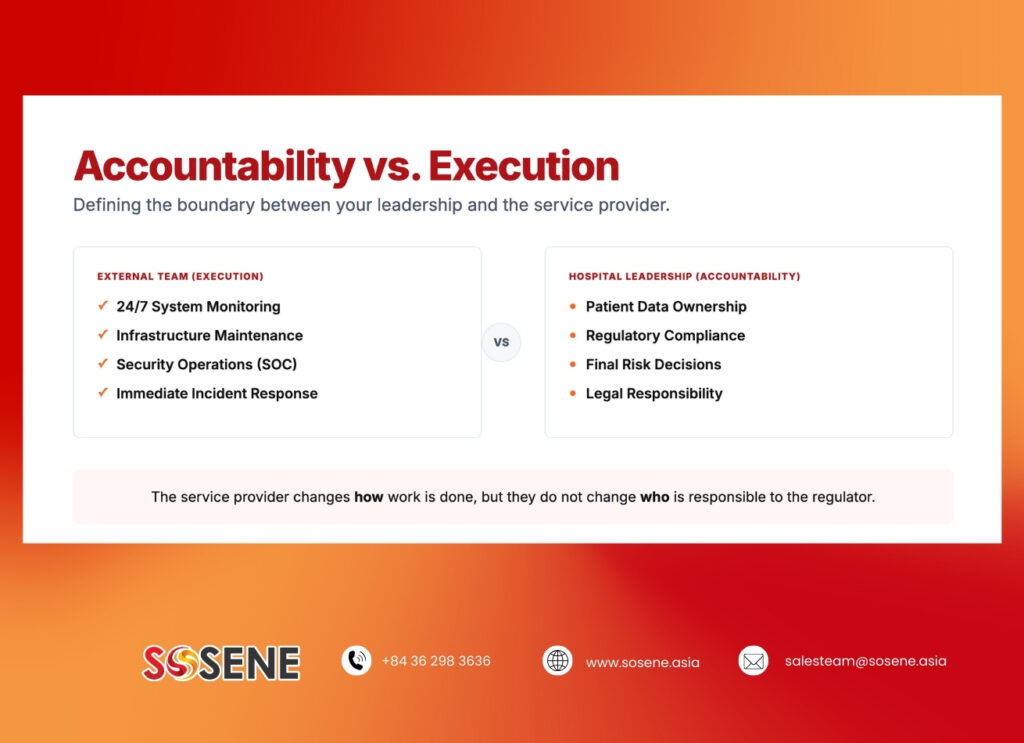
Managed IT services represent an operating model where defined IT functions are executed by an external team on an ongoing basis. These functions typically include system monitoring, infrastructure maintenance, security operations, and incident response. The objective is operational continuity rather than transformation.
This model does not transfer ownership of data, systems, or regulatory responsibility. Healthcare organizations remain accountable for compliance outcomes, audit findings, and patient data protection. Regulators continue to engage directly with the institution, not the service provider.
For decision-makers, the implication is structural rather than technical. Managed IT services change how work is executed, not who carries accountability. This distinction must be reflected clearly in governance, contracts, and escalation models.
Business Drivers Behind Managed IT Services Adoption
Healthcare leaders typically consider managed IT services when operational risk outweighs the benefits of direct internal control. Staffing constraints, skill shortages, and increasing system complexity limit the scalability of in-house teams. This becomes visible during audits, incidents, or periods of regulatory change.
The benefits of managed IT services are primarily operational. Predictable service levels reduce disruption to clinical and administrative operations. Access to specialized expertise supports compliance readiness without expanding permanent headcount.
Decision pressure increases during growth, consolidation, or digital expansion. Leadership teams seek stability without redesigning the entire organization. Managed IT services offer a controlled way to absorb complexity under these conditions.
Comparing Managed IT Services With Alternative Operating Models
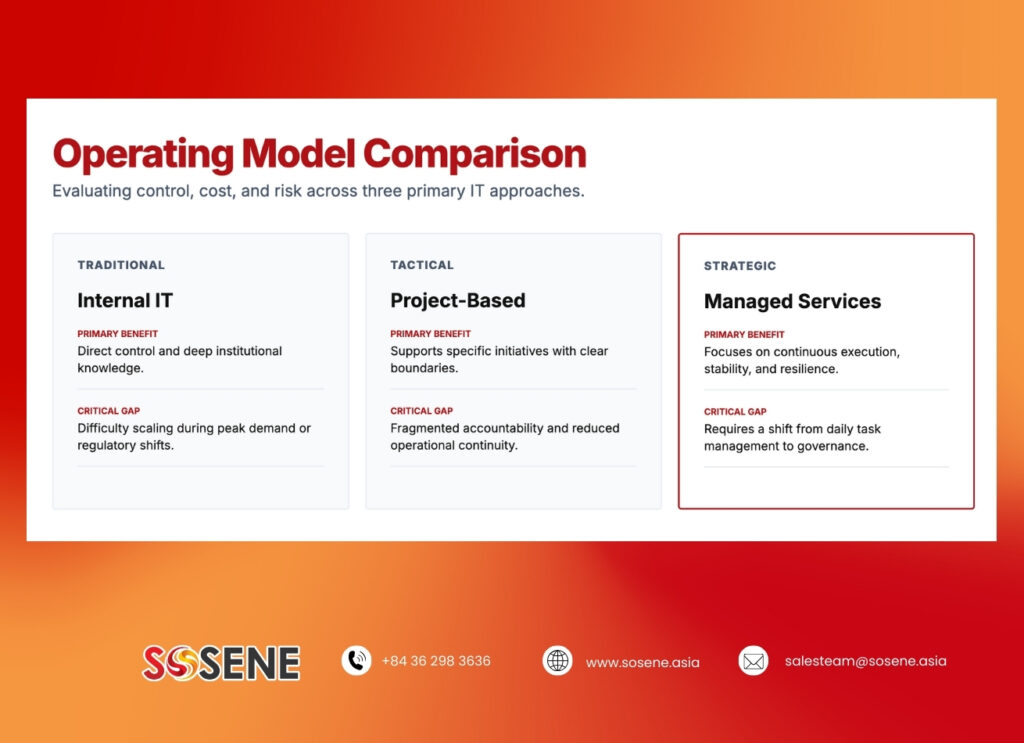
Healthcare organizations generally choose between internal IT operations, project-based outsourcing, and managed IT services. Each approach reflects different assumptions about control, cost structure, and risk exposure.
Internal IT teams provide direct control and institutional knowledge. They require sustained investment and struggle to scale during peak demand or regulatory shifts. Compliance risk rises when expertise gaps persist.
Project-based outsourcing supports specific initiatives but fragments accountability. Multiple vendors increase coordination overhead and reduce operational continuity. Long-term risk accumulates across disconnected systems.
Managed IT services emphasize continuous execution and stability. Control shifts from daily task management to governance and performance oversight. This trade-off appeals to organizations prioritizing resilience over tactical flexibility.
Strategic Comparison of Healthcare IT Operating Models
| Dimension | Internal IT Team | Project-Based Outsourcing | Managed IT Services |
|---|---|---|---|
| Accountability for compliance | Fully internal | Fully internal | Fully internal |
| Execution responsibility | Internal staff | External per project | External, ongoing |
| Control over daily operations | High | Medium to low | Medium |
| Governance complexity | Low to medium | High | High |
| Scalability under regulatory change | Limited | Inconsistent | Strong |
| Cost predictability | Low | Medium | High |
| Operational continuity | Dependent on staffing | Fragmented | Structured |
| Audit readiness | Variable by team capability | Inconsistent across vendors | Process-driven |
| Dependency risk | Internal talent risk | Vendor fragmentation risk | Provider dependency risk |
| Suitability for healthcare compliance | Strong if mature | Weak at scale | Strong if governed well |
Risks and Trade-Offs of Managed IT Services in Healthcare
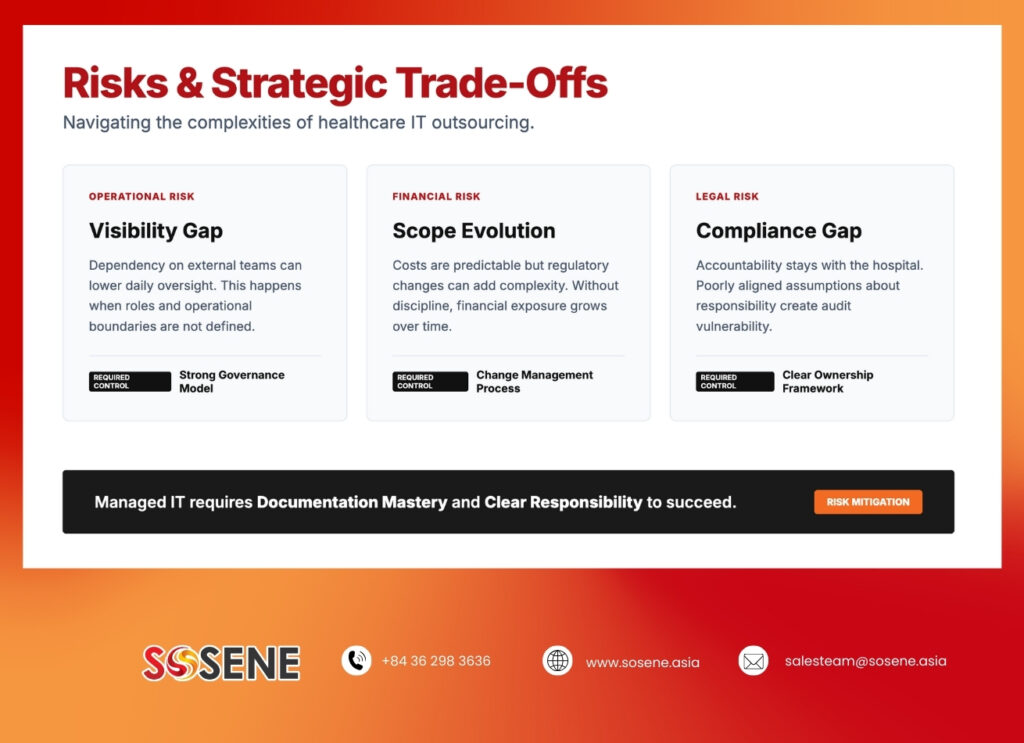
Managed IT services introduce dependency on external execution capability. Without strong governance, visibility into daily operations can decline. This risk increases when roles and boundaries are poorly defined.
Cost predictability improves at the service level but may conceal long-term complexity. Regulatory changes and scope evolution require disciplined change management. Without it, financial exposure can rise gradually.
Compliance accountability remains entirely with the healthcare organization. Misaligned assumptions about responsibility create audit vulnerability. Clear ownership models must be established from the outset.
When Managed IT Services Make Strategic Sense
Managed IT services align well with organizations facing sustained regulatory pressure and operational complexity. They support environments where uptime, data integrity, and security are non-negotiable. This includes multi-location providers and digital health platforms.
The model suits leadership teams focused on clinical outcomes rather than IT execution. Operational maturity allows governance to replace hands-on control. This balance supports stability under regulatory stress.
It also fits organizations planning gradual digital expansion. Managed IT services provide continuity during transition periods. Execution risk is reduced while strategy evolves.
When Managed IT Services May Not Be the Right Choice
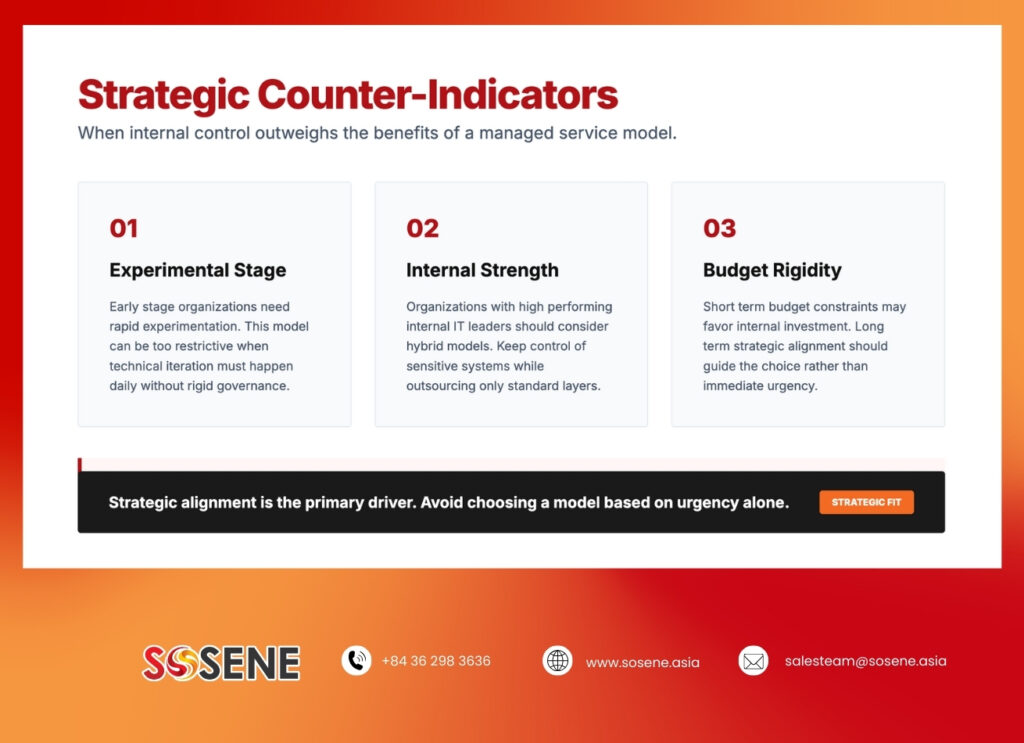
Early-stage healthcare organizations may find this model restrictive. Rapid experimentation often requires direct technical control. Managed IT services can slow iteration when governance structures are immature.
Organizations with strong internal IT leadership may prefer hybrid models. Internal teams retain control over sensitive systems. External providers focus on defined operational layers.
Cost sensitivity can also limit suitability. Short-term budget constraints may favor incremental internal investment. Strategic alignment should guide the decision rather than urgency.
Strategic Decision Guidance for Healthcare Leaders
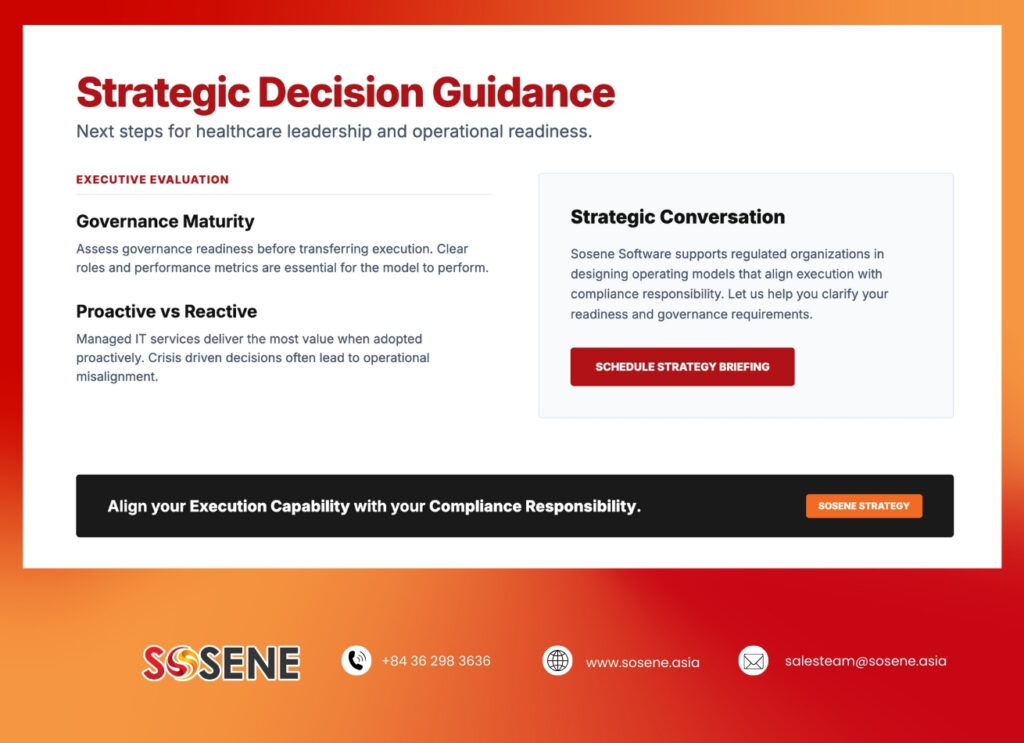
Choosing managed IT services is a structural decision rather than a tactical fix. It reflects how leadership balances control, risk, and operational focus. This choice should be revisited as the organization evolves.
Executives should assess governance readiness before transferring execution. Clear roles, escalation paths, and performance metrics are essential. Without them, the model underperforms.
Timing matters as much as readiness. Managed IT services deliver the most value when adopted proactively. Crisis-driven decisions often lead to misalignment.
Healthcare leaders evaluating managed IT services often benefit from an independent, risk-focused discussion. Sosene Software supports regulated organizations in designing operating models that align execution capability with compliance responsibility. A strategic conversation can help clarify readiness, governance requirements, and long-term fit.
Conclusion
Managed IT services should be viewed as a long-term operating choice rather than a technical shortcut. They offer stability and access to specialized capability under regulatory pressure. The trade-off lies in governance discipline and strategic clarity.
Healthcare leaders must evaluate this model through a risk and accountability lens. Short-term efficiency gains are secondary to sustained compliance and resilience. When aligned properly, managed IT services can strengthen operational foundations over time.
FAQs
How do managed IT services affect healthcare compliance responsibility?
Managed IT services do not transfer regulatory accountability. Healthcare organizations remain responsible for compliance, audits, and data protection. Providers execute defined tasks under governance oversight. Clear accountability models are essential to avoid audit exposure.
What are the benefits of managed IT services for healthcare organizations?
The benefits of managed IT services include operational stability, predictable service levels, and access to specialized expertise. They reduce execution risk during regulatory change. This supports continuity without expanding internal teams.
How do managed IT services compare to internal IT teams?
Managed IT services typically replace variable staffing pressure with defined service execution. Internal teams retain strategic control while governance becomes the primary management layer. The trade-off centers on control versus scalability.
When should healthcare organizations avoid managed IT services?
Organizations requiring rapid experimentation or lacking governance maturity may struggle with managed IT services. The model can limit flexibility in early stages. Hybrid or internal approaches may be more appropriate.
What should executives evaluate before selecting a managed IT service?
Executives should evaluate governance capability, regulatory understanding, and operating transparency. Technical capability alone is insufficient. Alignment with healthcare risk profiles is critical.