Global commerce has evolved from mass marketing to precision personalization. Today’s buyers expect every interaction to feel designed just for them. Yet, many enterprises still rely on static segmentation and fragmented tools.
This is where data-driven e-commerce powered by AI personalization becomes a competitive differentiator. By transforming customer data into actionable intelligence, businesses not only understand what customers buy — but why they buy.
In this article, you’ll discover how global leaders, including fast-growing players across Southeast Asia, are using AI to turn customer insight into sustained growth.
Table of Contents
Key Takeaways
- AI personalization transforms e-commerce from transactional to experiential.
- Data-driven commerce unlocks deeper insight into customer intent and value.
- Real-time intelligence improves ROI, retention, and operational precision.
- Companies in SEA markets are setting new standards in adaptive commerce.
- Sosene helps enterprises build AI-ready infrastructure that scales globally.
Further Reading
How Data-Driven E-Commerce Works
At its core, data-driven e-commerce turns every interaction into insight. The process operates as a continuous loop of data collection, analysis, and action.
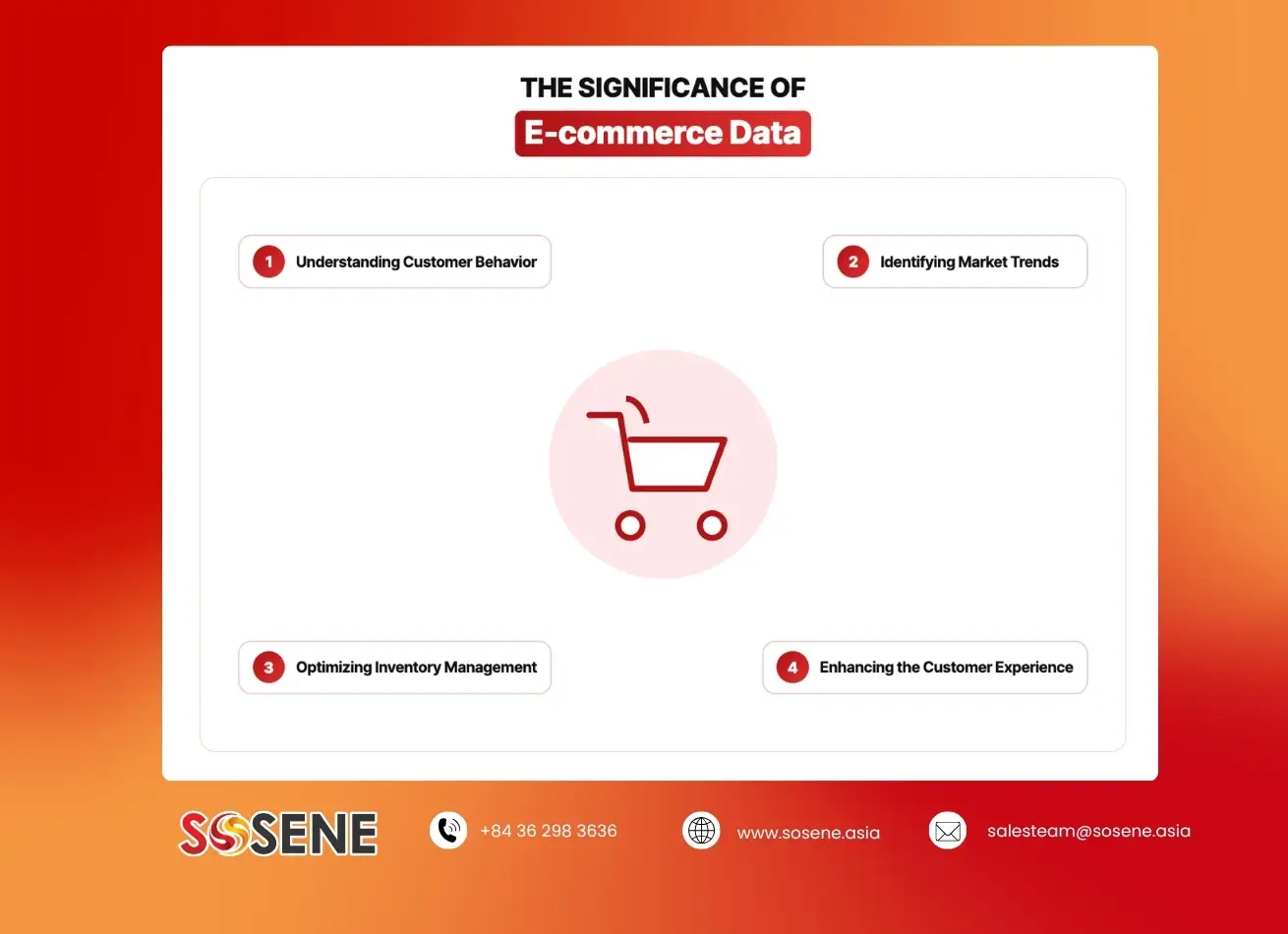
1. Data Collection Across Every Touchpoint
Modern e-commerce systems gather data from browsing patterns, search behavior, purchase history, social activity, and contextual factors like time and device type.
Unlike legacy CRM systems, AI models unify these signals into a single customer view, connecting marketing, sales, and fulfillment data in real time.
2. Behavioral and Predictive Analysis
AI and machine learning algorithms go beyond simple filters. They identify latent patterns and the “why” behind customer actions.
For example, a consumer who browses home gym equipment at midnight likely values convenience and privacy. AI systems use such micro-behaviors to predict purchase probability and recommend personalized offers automatically.
In Southeast Asia, leading platforms like Lazada and Shopee already use these signals to optimize promotions dynamically, proving how real-time adaptation drives higher retention.
3. Real-Time Experience Optimization
Once insights are gathered, AI engines personalize the on-site experience — dynamically changing layouts, banners, and product orders based on each user’s intent.
For instance, a returning visitor might see a “Reorder Now” shortcut, while a first-time buyer gets guided recommendations.
This instant adaptation builds trust and reduces decision fatigue — key levers for modern commerce success.
Key Applications of AI-Powered Personalization
AI isn’t just improving customer experience, it’s transforming every operational layer of e-commerce.
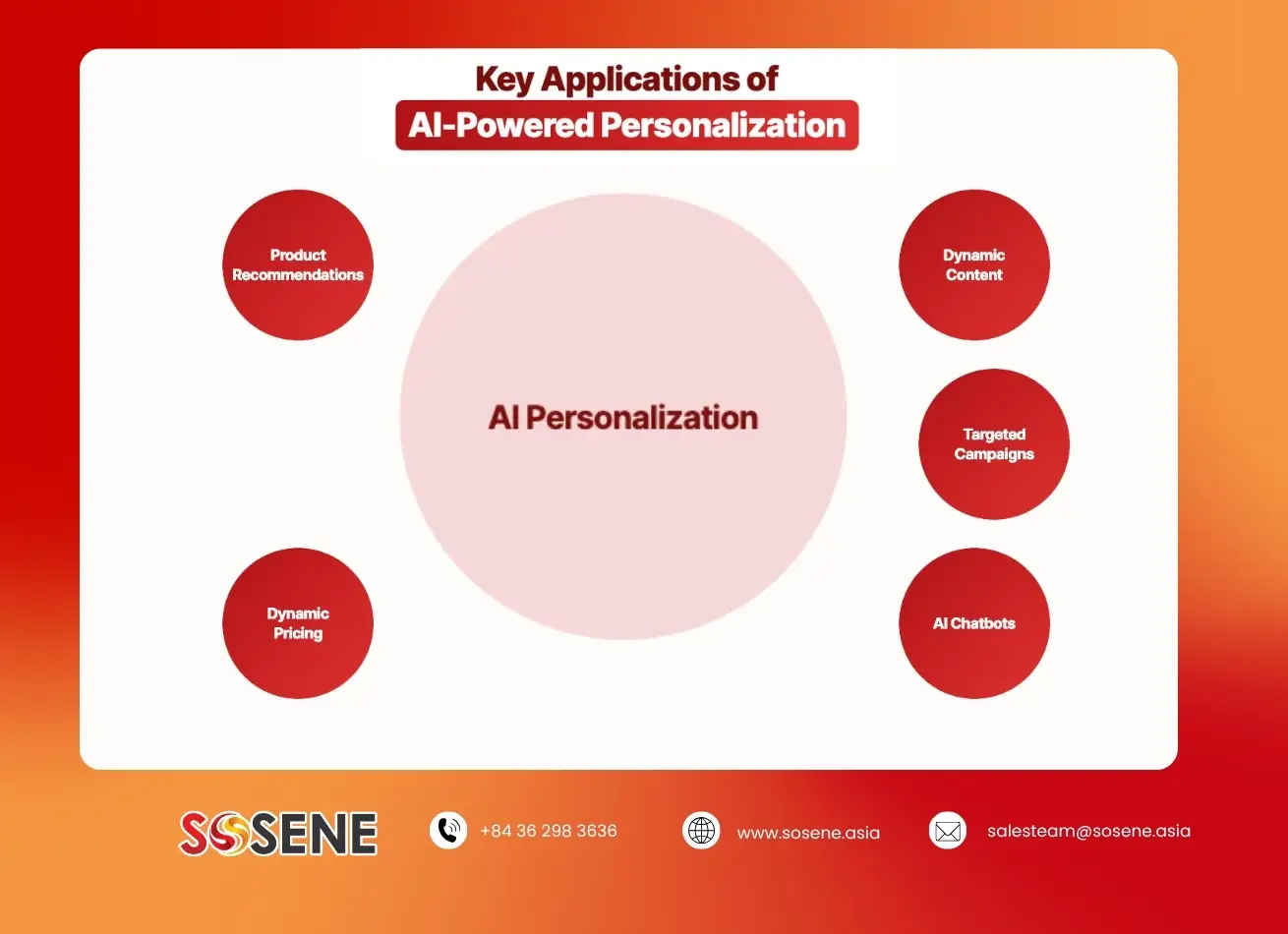
Personalized Product Recommendations
AI learns from both individual and collective behavior to suggest what customers truly want. According to McKinsey, 35% of Amazon’s revenue originates from its recommendation engine a clear signal of personalization’s power.
Dynamic Content Customization
AI adjusts on-site content banners, copy, and visuals based on visitor profiles. For example, a sportswear brand can show different images for runners in Singapore versus hikers in Japan.
Targeted Marketing Campaigns
Instead of generic email blasts, AI segments customers by predicted intent and value. Messages are timed to coincide with when they’re most likely to engage improving click-through and reducing cost per conversion.
AI-Powered Chatbots & Virtual Assistants
Conversational AI now serves as the first layer of customer support. These assistants use Natural Language Processing (NLP) to respond instantly, increasing satisfaction while reducing human workload.
Dynamic Pricing & Demand Forecasting
AI analyzes supply, competition, and consumer sensitivity to adjust prices in real time optimizing both revenue and inventory.
This approach, used widely in travel and retail, has now become a cornerstone of modern commerce.
Business Impact: From Data to Measurable Growth
The benefits of data-driven e-commerce extend far beyond marketing efficiency. When executed well, it becomes a growth engine that drives measurable ROI.

1. Increased Sales and Higher ROI
Personalization typically increases conversion rates by 15–20%, according to BCG research.
For global retailers, this translates into millions in incremental revenue from existing traffic.
2. Enhanced Customer Experience
Every tailored experience builds a sense of recognition. Customers who feel understood are 80% more likely to repurchase and recommend a brand.
3. Improved Retention and Lifetime Value
AI systems predict churn before it happens, enabling proactive engagement. Enterprises can reward loyalty and prevent attrition — reducing acquisition cost over time.
4. Operational Efficiency
Beyond marketing, data-driven commerce improves forecasting, logistics, and inventory optimization. AI predicts demand patterns, minimizing waste and aligning procurement cycles with real consumption.
“E-commerce personalization is no longer an add-on. It’s the infrastructure of modern retail — where data, design, and intelligence converge to deliver measurable growth.”
Sosene Team
Global Insights with Southeast Asia Momentum
While global giants pioneered AI-driven retail, Southeast Asia has become a proving ground for scalable innovation.
Countries like Singapore, Vietnam, and Indonesia combine high digital adoption with diverse consumer behaviors — creating rich data ecosystems for experimentation.
Sosene’s regional clients leverage AI-powered personalization to serve multilingual, multi-market audiences while keeping infrastructure cost-efficient.
This balance of local insight and global scalability defines the next chapter of e-commerce growth.
How Sosene Enables AI-Driven Commerce Transformation
Sosene helps enterprises evolve from fragmented systems to fully AI-enabled commerce ecosystems. Our approach integrates strategy, data readiness, and AI delivery into a measurable transformation journey.

1. Strategy Alignment
We start by mapping business goals to measurable data objectives — ensuring personalization efforts drive tangible KPIs, not vanity metrics.
2. Data Infrastructure & Governance
Sosene builds unified data pipelines that connect analytics, marketing, and sales platforms, creating a single source of truth across geographies.
3. AI-Augmented Development
Our teams integrate ML models into existing e-commerce platforms — enhancing search, recommendations, and UX in real time.
4. Secure & Scalable Delivery
With enterprise-grade infrastructure and compliance expertise, Sosene ensures every AI model operates securely, ethically, and at global scale.
Conclusion
In today’s digital economy, data-driven e-commerce is more than a technology trend — it’s a leadership imperative. Enterprises that master AI personalization don’t just sell more; they build deeper relationships and sustain competitive advantage across markets.
Sosene empowers global businesses through AI-driven engineering — helping them transform data into growth, one customer at a time.
Ready to scale your commerce strategy with AI?
Book a personalized consultation with Sosene and start transforming how your business connects, converts, and grows.
FAQs
What is data-driven e-commerce?
It’s the use of data and AI to guide every decision in the e-commerce journey from product recommendation to pricing — ensuring personalization at scale.
How does AI personalization improve conversion rates?
By tailoring the shopping experience in real time, AI reduces friction, shows relevant products, and increases the likelihood of purchase.
What data is needed for personalization?
Customer behavior, transaction history, search intent, and demographic data are typically used all anonymized and governed under data privacy laws.
How long does it take to implement?
Depending on infrastructure, enterprises can begin pilot projects in 3–6 months and scale globally within a year.
Why partner with Sosene?
Sosene combines AI expertise, engineering excellence, and regional insight delivering measurable outcomes for global e-commerce transformation.